What Is a Solar Generator and How Does It Work?
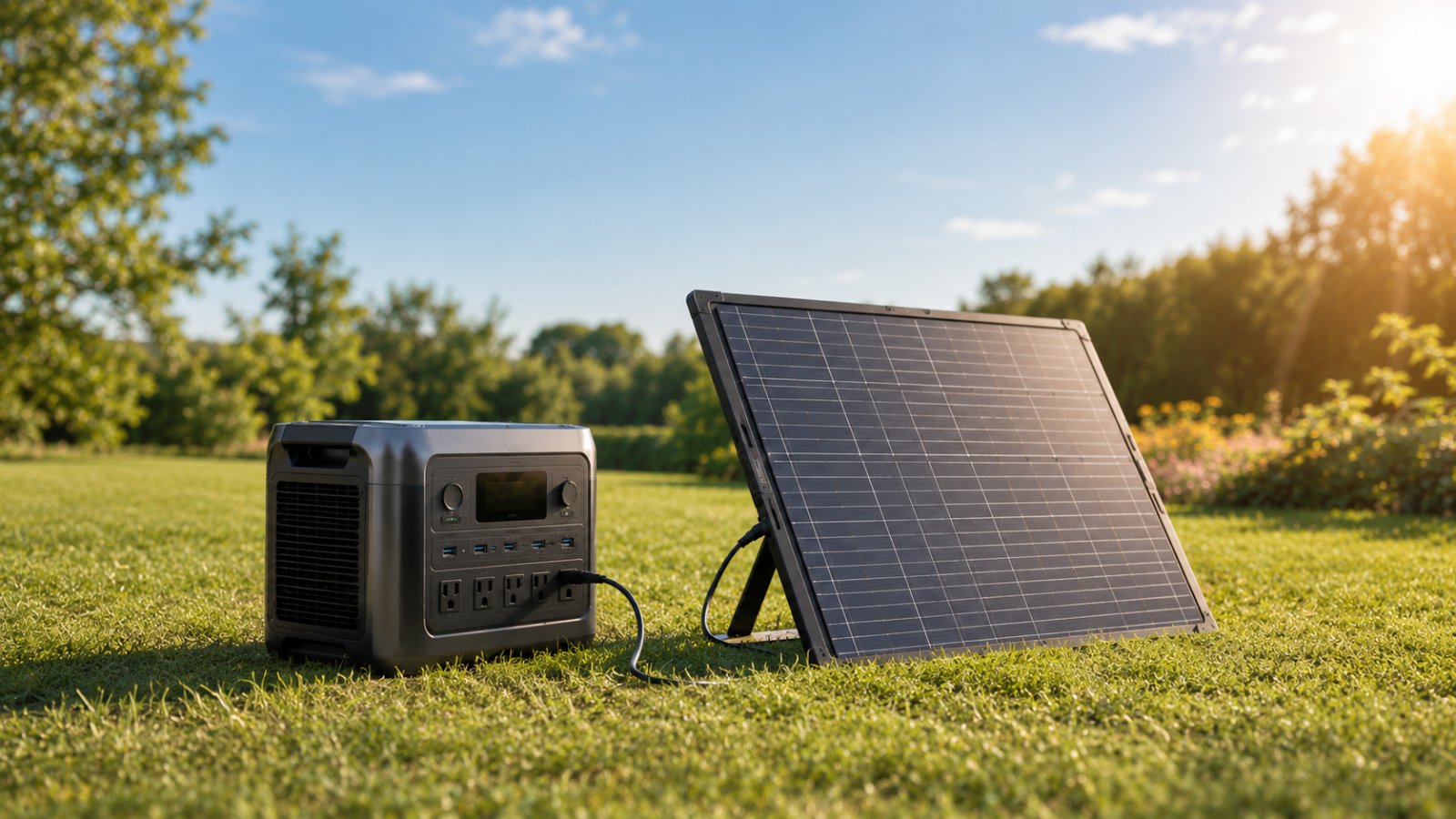
Quick answer: a solar generator is a portable power station — a large rechargeable battery with an inverter and outlets — that recharges from solar panels. It stores electricity and delivers it as standard household AC power, all with no fuel, no engine, and no emissions. Despite the name, it doesn’t “generate” power like a gas generator; it stores solar energy and releases it when you need it.
If that raises more questions than it answers, don’t worry — the concept is simple once you see the parts. Here’s how a solar generator actually works, what it can and can’t do, and whether it’s the right kind of power for you.
The four parts of a solar generator
Every solar generator is really two things working together: a power station and solar panels. Inside, four components do the work.
1. Solar panels. These capture sunlight and convert it into DC (direct current) electricity. They’re usually foldable and portable, and they plug into the power station.
2. Charge controller. Built into the power station, this manages the energy coming from the panels — regulating voltage and current so the battery charges safely and efficiently. Quality units use MPPT (Maximum Power Point Tracking) controllers, which squeeze the most energy out of the panels.
3. Battery. The heart of the system. It stores the energy for later use. In 2026, the standard is LiFePO4 (lithium iron phosphate), prized for its long life — 3,000 to 4,000+ charge cycles, roughly a decade of regular use.
4. Inverter. This converts the battery’s stored DC electricity into the AC (alternating current) power that your household devices use, delivered through standard wall outlets. Good inverters produce “pure sine wave” power, which is safe for sensitive electronics.
How it works, step by step
Put the parts together and the flow is straightforward:
Sunlight hits the solar panels, which produce DC electricity.
The electricity flows into the power station, where the charge controller regulates it.
The battery stores that energy until you need it.
When you plug in a device, the inverter converts the stored DC power into standard AC power.
Your device runs — silently, with no fuel and no fumes.
You can also charge most solar generators from a wall outlet or a car’s 12V socket, so you’re never dependent on sunshine alone. Many people charge from the wall for everyday readiness and use the panels for off-grid trips or extended outages.
What can a solar generator run?
That depends on its size, but a mid-range unit can power far more than people expect:
Small devices: phones, tablets, laptops, cameras, lights, routers
Medical devices: CPAP machines (a popular use for outage backup)
Kitchen appliances: a full-size refrigerator, a microwave in bursts, a coffee maker
Tools and more: power tools, fans, a TV, a small mini-split in short runs
What it can’t easily do is run high-wattage heating appliances (space heaters, hair dryers, electric ovens) for long, or power an entire house — unless you buy a large, split-phase 240V system designed for whole-home backup. To figure out what size you need, see How to Size a Solar Generator for Your Home.
Solar generator vs traditional generator
The name invites confusion, so here’s the key difference. A traditional (gas) generator burns fuel to generate electricity continuously — as long as you feed it gas, it makes power, but it’s loud, emits carbon monoxide, and must run outdoors. A solar generator doesn’t burn anything; it stores energy in a battery and refills from the sun. It’s silent, safe to run indoors, and needs no fuel or maintenance — but it’s limited by its battery capacity and how much sunlight it can capture. We break down the full comparison in Solar Generator vs Portable Power Station and in our power-station-vs-gas-generator guide.
Pros and cons of a solar generator
Pros
Silent operation — no engine noise
Safe indoors — no fumes or carbon monoxide
No fuel to buy, store, or run out of
Recharges from the sun, so it can run for days in an outage
Almost no maintenance
Clean, pure sine wave power for electronics
Cons
Limited by battery capacity (unless expandable)
Higher upfront cost than a basic gas generator
Solar recharging is slow and weather-dependent
Large whole-home units are heavy and expensive
Who is a solar generator for?
A solar generator is ideal for anyone who wants silent, safe, fuel-free power: homeowners preparing for outages, campers and RVers, van lifers, off-grid cabin owners, and anyone who relies on a medical device and needs dependable backup. It’s especially valuable where gas generators are impractical — apartments, tents, indoor spaces, and campgrounds that ban them. If your needs are very large and continuous (running a whole house for a week straight), you may still want a gas or propane generator as a backstop, but for most people, a solar generator covers the bases beautifully.
Limitations and who this isn’t for
The term is marketing shorthand: there is no engine and no fuel, just a battery, an inverter and solar panels. That means clean, silent power, but also that a cloudy stretch or too few panels leaves you short. Understanding the three parts — battery capacity, inverter output and panel wattage — matters more than the generator label when deciding if one fits your needs.
How we source this guide: capacities, runtimes and prices are drawn from manufacturer documentation and reputable public sources and can change. Always confirm current specifications and pricing on the manufacturer’s website before buying.
Frequently asked questions
What is a solar generator in simple terms? It’s a big rechargeable battery (a power station) that you charge with solar panels and use to power your devices. It stores solar energy and delivers it as standard AC electricity, with no fuel or emissions.
How does a solar generator work? Solar panels convert sunlight into electricity, a charge controller feeds it into a battery for storage, and an inverter converts that stored energy into household AC power when you plug in a device. It can also charge from a wall outlet or car.
Does a solar generator really run on sunlight? Yes. Solar panels recharge the battery from sunlight, so it can run for days during an outage as long as the sun shines. Most units can also charge from a wall outlet or car for convenience.
Can a solar generator power a house? Small units back up essentials like the fridge, lights, and electronics. Only large split-phase 240V systems, wired through a transfer switch, can power a whole house including hard-wired appliances.
Is a solar generator the same as a portable power station? Nearly — a solar generator is a portable power station paired with solar panels. The power station is the battery; add panels and you have a solar generator. See our dedicated comparison for the full nuance.
The bottom line
A solar generator is simply a battery power station that recharges from the sun — silent, safe indoors, fuel-free, and endlessly rechargeable in good weather. It stores solar energy and delivers clean AC power for everything from phones to refrigerators, making it one of the most versatile and practical ways to keep the lights on during an outage or off the grid. Once you understand the four parts — panels, charge controller, battery, and inverter — the “magic” is just good, quiet engineering.