Solar Generator vs Portable Power Station: What’s the Difference?
If you’ve been shopping for backup power, you’ve hit this confusion: some products are called “portable power stations” and others “solar generators,” and they look almost identical. Are they different things? Which one do you actually need? The marketing doesn’t make it obvious, so let’s clear it up once and for all.
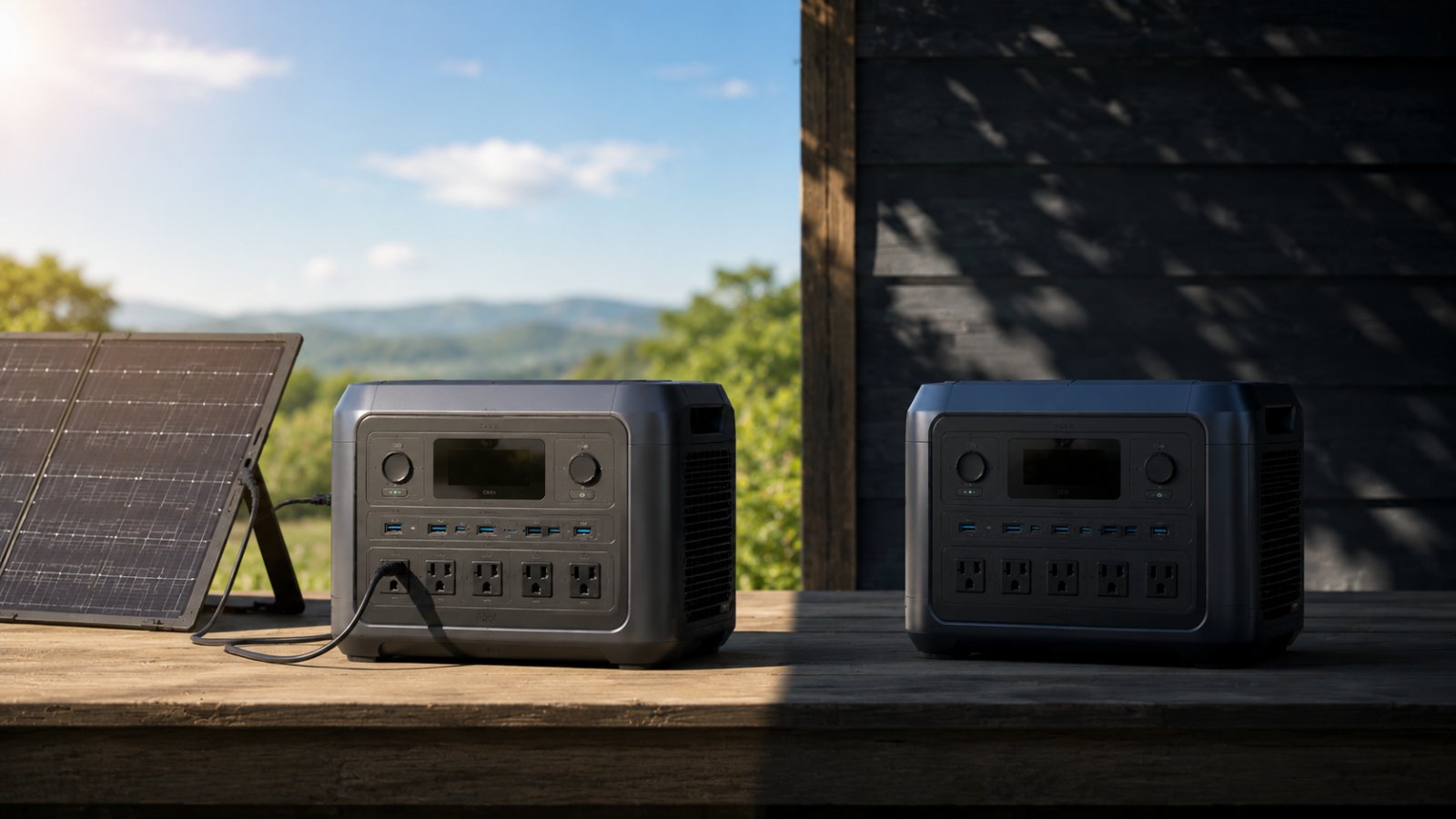
The short answer: they’re essentially the same device. A “solar generator” is simply a portable power station that’s paired with (or sold with) solar panels. The power station is the battery; add solar panels and the industry calls the combo a solar generator. The core unit — the box with the battery, inverter, and outlets — is identical either way.
Here’s exactly what each term means, why the labels exist, and what actually matters when you buy.
The key distinction in one sentence
A portable power station is the battery unit; a solar generator is that same battery unit plus solar panels to recharge it from the sun.
That’s the whole difference. Every solar generator contains a portable power station. Not every portable power station is sold with panels — but nearly all of them can accept solar panels, which would make them a “solar generator” the moment you add one.
Side-by-side: the terms compared
| Portable Power Station | Solar Generator | |
|---|---|---|
| What it is | Battery + inverter + outlets | Power station + solar panels |
| The core device | The power station | The same power station |
| Recharges from | Wall, car, (and solar if you add panels) | Wall, car, and included/paired solar panels |
| Panels included? | Usually not | Yes, or sold as a bundle |
| Runs on sunlight? | Only if you add panels | Yes |
| Typical marketing | Emphasizes capacity, output, portability | Emphasizes off-grid, solar, emergencies |
| Best label when… | You’ll charge mostly from the wall | You want to recharge from the sun |
Why the two terms exist
The labels are mostly about marketing and how the product is sold, not fundamentally different technology.
Brands use “portable power station” to emphasize the unit’s core strengths — capacity, output, portability, fast charging — for buyers who’ll mostly recharge from a wall outlet (think home backup, tailgating, or job sites).
They use “solar generator” to emphasize the off-grid, renewable, emergency-preparedness angle, and it usually signals that solar panels are included or heavily featured. The term “generator” also helps buyers who are cross-shopping against gas generators understand the category.
So when you see “solar generator,” picture “power station + panels, marketed for off-grid and emergencies.” When you see “portable power station,” picture “the battery unit, which you can turn into a solar generator by adding panels.”
What actually matters when you buy
Because the core device is the same, the specs that matter are identical whether it’s labeled a power station or a solar generator:
Battery capacity (Wh) — how long it runs. Output (W) — what it can run at once, plus surge for motors. Battery chemistry — insist on LiFePO4 for its long life. Maximum solar input — how fast it can recharge from panels (matters a lot if you’ll use solar). Expandability — whether you can add capacity later. Charging speed — how fast it refills from the wall.
Focus on these, not on which marketing label the product wears. A great power station is a great solar generator the moment you plug panels into it.
Do you actually need the solar panels?
This is the real decision behind the terminology. Ask yourself how you’ll recharge:
You mostly need the panels (buy the “solar generator” / add panels) if:
You want backup that survives multi-day outages, recharging each sunny day
You camp, RV, or go off-grid, away from wall outlets
You want true energy independence and renewable recharging
You may not need panels yet (a “portable power station” alone is fine) if:
Your outages are short (hours, not days) and you can recharge from the wall
You’ll mostly use it at home, tailgates, or job sites with grid access
You want to start with the battery and add panels later (most units let you)
The good news: because nearly every power station accepts solar, you’re never locked out. Buy the station now, add panels whenever you want to “upgrade” it into a full solar generator. See Best Portable Solar Panels for Power Stations when you’re ready.
A quick note on gas “generators”
Don’t let the shared word “generator” confuse you further. A gas generator actually generates electricity by burning fuel — it’s loud, emits carbon monoxide, and runs outdoors. A solar generator doesn’t generate anything; it stores solar energy in a battery and releases it. They’re completely different categories that happen to share a word. If you’re weighing battery power against gas, that’s a separate comparison — see our power-station-vs-gas-generator guide.
So which should you buy?
Stop thinking of it as an either/or between two different products, because it isn’t. Decide instead on two questions:
What size power station do I need? (Capacity and output for your loads — our sizing guides cover this.)
Will I recharge from the sun? If yes, buy the panels too (a “solar generator” kit); if not yet, buy the station alone and add panels later.
Either way, you’re buying the same excellent core device. The label is just telling you whether the sun is part of the plan.
Real-world buying scenarios
To make the terminology practical, here’s how the choice plays out for real buyers:
“I want home backup and I have wall power to recharge.” Buy the power station alone. You’ll top it off from the outlet before and between outages. Add panels later only if you start worrying about multi-day events.
“I camp and go off-grid on weekends.” Buy the solar generator kit (station + panels). Away from outlets, the panels are what keep you powered past the first charge.
“I’m prepping for long outages or grid independence.” Buy the solar generator, and size the panels generously — this is exactly the scenario the solar half is built for.
“I’m not sure yet.” Buy a quality power station with a high solar input, and add compatible panels whenever you’re ready. You lose nothing by starting with the battery, since nearly every unit accepts solar down the line.
In every case, you’re choosing the same class of device — the only real decision is whether the panels come now or later.
Limitations and who this isn’t for
These overlap heavily — a solar generator is essentially a power station bundled with panels. The real question is not the name but whether you will actually recharge from the sun: without enough panels and daylight, a solar generator is just a power station. Buy the panels only if your use case (off-grid, long outages) genuinely benefits from solar recharging.
How we source this guide: capacities, runtimes and prices are drawn from manufacturer documentation and reputable public sources and can change. Always confirm current specifications and pricing on the manufacturer’s website before buying.
Frequently asked questions
Is a solar generator the same as a portable power station? Essentially yes. A solar generator is a portable power station paired with solar panels. The battery unit is identical; the “solar generator” label just means panels are included or featured for recharging from the sun.
What’s the difference between a solar generator and a power station? The panels. A power station is the battery-and-inverter unit; a solar generator is that same unit plus solar panels to recharge it. Nearly every power station can become a solar generator by adding compatible panels.
Do I need solar panels for a power station? Not necessarily. You can recharge most power stations from a wall outlet or car. You need panels if you want to recharge from the sun — essential for multi-day outages and off-grid use, optional for short outages with grid access.
Can I turn a portable power station into a solar generator? Yes. Add compatible solar panels (matched to the station’s solar input and voltage) and you’ve created a solar generator. Most stations accept solar and include or support a solar charging cable.
Which is better, a solar generator or a portable power station? Neither is “better” — they’re the same core device. Choose based on your needs: buy panels (a solar generator) if you’ll recharge from the sun; the station alone is fine if you’ll charge from the wall and can add panels later.
Are solar generators and power stations priced differently? The power station alone is cheaper; the solar generator (station + panels) costs more because you’re buying the panels too. Kits often discount the bundle, so buying together can cost less than buying the pieces separately later.
Can any power station accept solar panels? Nearly all modern units have a solar input and can accept panels, with the right cable and a compatible voltage. That’s why the line between “power station” and “solar generator” is so blurry — most stations are one panel away from being a solar generator.
Which lasts longer, a solar generator or a power station? They use the same battery, so lifespan is identical — typically 3,000–4,000+ LiFePO4 cycles, about a decade. The panels, if included, last 20+ years.
The bottom line
Solar generator vs portable power station isn’t a battle between two products — it’s the same battery unit with or without solar panels attached. The power station is the heart of both; add panels and it’s a solar generator, ready to recharge from the sun for off-grid trips and multi-day outages. So focus on the specs that actually matter — capacity, output, LiFePO4 chemistry, solar input, and expandability — decide whether the sun is part of your plan, and buy accordingly. The label is just marketing; the machine is what counts.