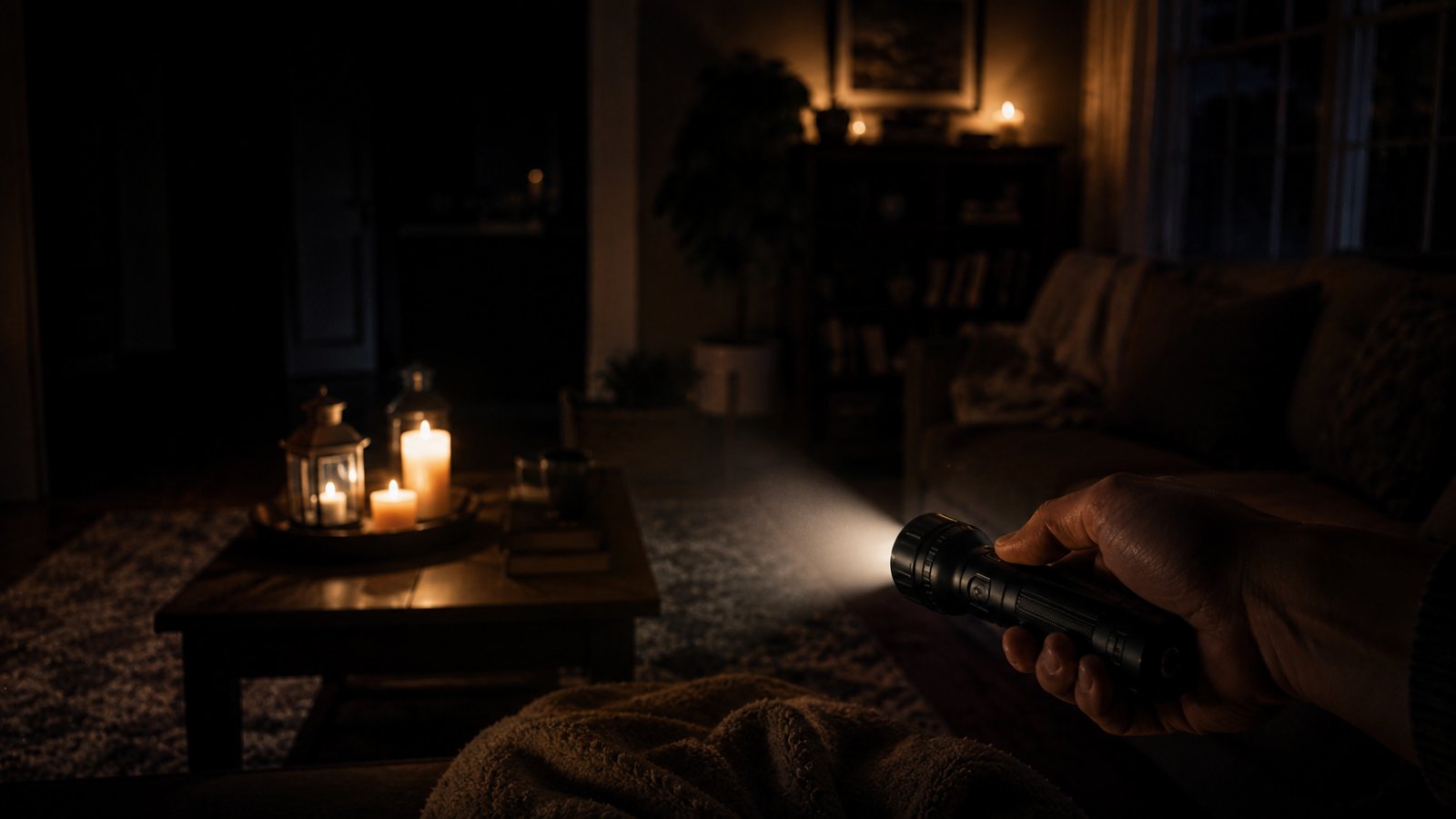
What to Do When the Power Goes Out: Step-by-Step Guide
The lights flicker and die, the house goes quiet, and — now what? Knowing exactly what to do in the first few minutes of a power outage keeps you safe, protects your food and electronics, and turns a stressful moment into a manageable one. Here’s your clear, step-by-step guide for what to do when the power goes out.
First things first: confirm it’s a real outage, report it to your utility, keep the fridge and freezer closed, protect your electronics, and switch to backup power and light safely. Then settle in and stay comfortable until the grid returns.
Step 1: Confirm it’s actually an outage
Before anything else, figure out whether the problem is the grid or your house:
- Check your circuit breaker or fuse box — a tripped breaker (not a grid outage) is a common, easy fix. Flip it back on.
- Look outside. Are your neighbors’ lights out too? Is the whole street dark? That points to a grid outage.
- Check your utility’s outage map on your phone (while it still has charge) to confirm and see the scope.
If it’s just your home and the breaker isn’t the cause, you may have an electrical issue worth a call to an electrician.
Step 2: Report the outage to your utility
If it’s a grid outage, report it — utilities often prioritize repairs based on reported outages, and reporting gets you on the notification list for restoration updates. Report via your utility’s app, website, or phone line. Save that number in your phone (and on paper) now, before you need it.
Step 3: Protect your electronics
When the power comes back, it can return with a surge that damages sensitive electronics. So:
- Unplug computers, TVs, gaming consoles, and other sensitive devices — or switch off their surge protectors.
- Leave one light switched on so you’ll know the moment power is restored.
- Turn off or unplug anything that was running when the power died (like a space heater or iron) so it doesn’t restart unattended.
Step 4: Keep the fridge and freezer closed
Your refrigerator becomes a giant cooler the instant the power dies — but only if you keep it shut:
- A closed fridge keeps food safe for about 4 hours.
- A full freezer stays safe for about 48 hours (24 hours if half-full).
- Resist the urge to peek. Every time you open the door, cold air escapes and the clock speeds up.
For the full food-safety rules, see How to Keep Food Cold During a Power Outage.
Step 5: Switch to backup power and light — safely
Now get your home running on backup:
- Turn on your backup power. A portable power station or home battery takes over silently and indoors. Prioritize the fridge, medical devices, phones, and Wi-Fi. (See Best Portable Power Stations of 2026.)
- If using a generator, run it OUTDOORS only — never in a garage, basement, or near windows. Generators produce deadly carbon monoxide.
- Grab your lights — LED flashlights, headlamps, and lanterns. Avoid candles if you can.
- Charge phones while you have backup power, so you stay connected.
Not sure what backup option fits your home? Our guide How to Power a House During a Blackout compares them all.
Step 6: Stay warm or cool
Your comfort — and sometimes your safety — depends on temperature:
- In winter: close off unused rooms, layer up with blankets, and use a safe backup heat source. Never use a gas stove or oven to heat your home (carbon monoxide risk). See How to Keep Your Heat On During a Winter Power Outage.
- In summer: stay hydrated, use battery fans, close blinds against the sun, and move to the lowest, coolest floor. If indoor heat becomes dangerous, relocate to a cooling center.
Step 7: Check on others and stay informed
- Check on vulnerable neighbors and relatives — especially older adults, people with medical needs, and anyone alone.
- Tune in to a battery or hand-crank radio for official updates, especially if cell service is spotty.
- Conserve phone battery — lower the brightness, close apps, and switch to low-power mode.
Step 8: When the power comes back on
Restoration has its own steps:
- Wait a few minutes, then reconnect electronics gradually rather than all at once, to avoid overloading circuits.
- Check your food. Discard anything perishable that’s been above 40°F for more than 2 hours. “When in doubt, throw it out.”
- Reset clocks and appliances, and check that the fridge and freezer are cooling properly.
- Recharge your backup power and restock anything you used, so you’re ready for next time.
Safety rules to never break
- Never run a generator or grill indoors — carbon monoxide is odorless and deadly.
- Stay away from downed power lines — assume every fallen line is live, and report it.
- Don’t use candles near anything flammable, and never leave them unattended.
- Never heat your home with a gas oven or stovetop.
Important safety notes
General steps can’t cover every situation. Prioritise safety: never run a generator, grill or camp stove indoors or in a garage — carbon monoxide is deadly — keep the fridge and freezer closed, and unplug sensitive electronics to protect them from surges when power returns. If an outage is prolonged or someone depends on medical equipment, contact your utility and local authorities.
This guide is general information, not professional, legal or medical advice. During an outage, follow guidance from your utility and local authorities, keep fuel-burning generators outdoors and away from windows, and seek professional help for medical power needs.
Frequently asked questions
What should I do first when the power goes out? Check whether it’s a tripped breaker or a grid outage (look at neighbors’ lights and your utility’s outage map). If it’s the grid, report it to your utility, then unplug sensitive electronics and keep your fridge and freezer closed.
Should I unplug things during a power outage? Yes — unplug sensitive electronics like computers and TVs to protect them from a surge when power returns. Leave one light on so you know when the power is back.
How long will my food stay good during an outage? A closed refrigerator keeps food safe for about 4 hours; a full freezer for about 48 hours (24 if half-full). Discard perishables that have been above 40°F for more than 2 hours.
Is it safe to use a generator when the power goes out? Only outdoors, at least 20 feet from the house and away from windows. Generators produce deadly carbon monoxide and must never run in a garage, basement, or enclosed space. Battery power stations are safe to use indoors.
How do I keep my phone charged during an outage? Use a power bank, a portable power station, or your car (with a charger or inverter). Conserve battery by lowering brightness, closing apps, and using low-power mode.
The bottom line
When the power goes out, work the steps: confirm the outage, report it, protect your electronics, keep the fridge closed, switch to backup power and light safely, manage the temperature, and check on others. Keep generators outside, stay clear of downed lines, and when power returns, check your food and reconnect gradually. Handle those first few minutes calmly and correctly, and even a long outage stays safe and manageable — especially if you’ve prepared in advance.