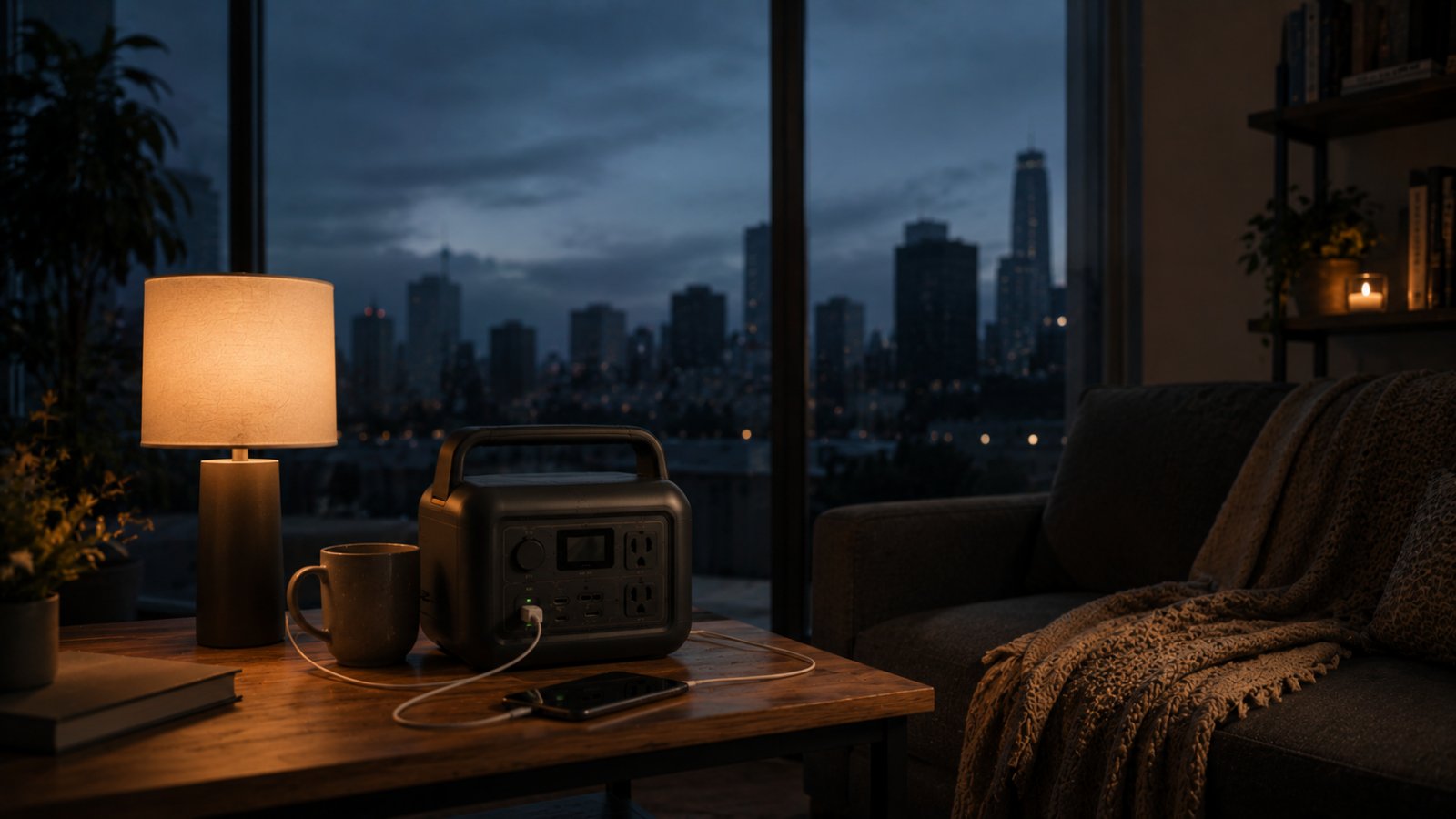
Emergency Power for Apartments: Options That Actually Work
Most backup-power advice assumes you own a house with a yard, a garage, and a gas line. If you live in an apartment, none of that applies — you can’t run a generator, you can’t install a home battery, and you can’t wire anything into the panel. So what actually works? The answer is better than you might think: modern battery power stations are practically made for apartment life — silent, safe to run indoors, and requiring zero installation. Here’s your realistic guide to emergency power for apartments.
The short version: a portable power station is the answer for apartments. It runs your fridge, devices, Wi-Fi, and even medical equipment indoors with no fumes, needs no installation, and recharges from any wall outlet. Add a small balcony or window solar panel for longer outages.
First, what WON’T work in an apartment
Let’s clear the deck, because a lot of common advice is useless (or dangerous) for apartment dwellers:
Gas generators — no. They produce deadly carbon monoxide and must run outdoors, far from windows. You have no safe place to run one, and most buildings ban them outright. Never run a generator on a balcony or indoors — people die this way every year.
Home battery systems (Powerwall, etc.) — no. These are permanently wired into a home’s electrical panel by an electrician. As a renter, you can’t install one, and you’ll be gone before it pays off.
Whole-home anything — no. You don’t control your building’s electrical system, so whole-home backup isn’t on the table.
That leaves the option that’s actually perfect for apartments.
What DOES work: portable power stations
A portable power station — a large rechargeable battery with regular outlets — is the ideal apartment backup power source, for every reason that matters in a rental:
It’s safe indoors. No exhaust, no carbon monoxide, no fumes. Run it in your living room, bedroom, or kitchen without a second thought.
It’s silent. No engine noise to disturb you or your neighbors — important in close quarters.
It needs no installation. Charge it from any wall outlet and it’s ready. No electrician, no landlord permission, no modifications.
It’s portable. Move it room to room, and take it with you when you move apartments.
It delivers clean power. Pure sine wave electricity that’s safe for laptops, TVs, phones, and medical devices.
It runs the things that matter during an apartment outage: your fridge, lights, Wi-Fi router, phones, laptops, a fan, and medical equipment like a CPAP.
How to size a power station for your apartment
Match the unit to what you want to run and for how long:
Basics (phones, laptop, lights, Wi-Fi, a fan): a compact 250–500 Wh unit is plenty for a night or a short outage — light, affordable, and easy to store.
Add the fridge and more: step up to a 1,000 Wh unit with an 1,800 W output, which runs a fridge, electronics, and small appliances for many hours. This is the sweet spot for most apartments wanting real backup.
Longer outages or medical needs: a 1,500–2,000 Wh unit (or an expandable one) keeps essentials going for a day or more.
Our roundups can help you choose: Best Portable Power Stations of 2026 and, for tighter budgets, Best Budget Portable Power Station Under $500. For medical equipment specifically, see Best Backup Power Options for Medical Devices at Home.
Add solar for longer outages
Even in an apartment, you can add solar recharging with a foldable solar panel placed on a balcony, in a sunny window, or on a windowsill. It won’t rival a rooftop array, but it can meaningfully extend your power station’s runtime during a multi-day outage — turning a battery that would eventually die into one that tops back up when the sun’s out. For renters who want longer resilience without any installation, it’s a smart, portable addition.
Smart apartment prep tips
- Keep it charged. A power station only helps if it’s full — top it off when a storm is forecast, and periodically otherwise.
- Prioritize your loads. During an outage, run the fridge and charge devices first; skip high-draw appliances.
- Have lights ready — LED lanterns and headlamps — and a battery radio.
- Know your building’s plan. Ask about backup power for elevators, water pumps, and secured entry doors, which may not work in an outage (important if you’re on a high floor or have mobility needs).
- Store water and food — a few days’ worth, since building water pumps may stop.
- Plan for heat/cooling — battery fans for summer, layers for winter, since you can’t run space heaters for long on battery.
Important safety notes
Apartments limit your options: generators are usually unsafe and often prohibited — no balconies, never indoors, because of carbon monoxide — and you can’t install fixed systems. That leaves battery power stations, which are capped by capacity and hard to recharge without solar access. Focus on essentials such as phone, lights, CPAP and a few hours of fridge, and check your building’s rules first.
This guide is general information, not professional, legal or medical advice. During an outage, follow guidance from your utility and local authorities, keep fuel-burning generators outdoors and away from windows, and seek professional help for medical power needs.
Frequently asked questions
What is the best emergency power for an apartment? A portable power station — it’s silent, safe to run indoors, needs no installation, and recharges from any outlet. It runs your fridge, devices, Wi-Fi, and medical equipment during an outage, making it ideal for apartments where generators aren’t an option.
Can I use a generator in an apartment? No. Gas generators produce deadly carbon monoxide, must run outdoors away from windows, and are banned in most buildings. There’s no safe way to run one in an apartment — use a battery power station instead.
What size power station do I need for an apartment? For phones, a laptop, lights, and Wi-Fi, a 250–500 Wh unit suffices. To also run a fridge and more, choose a 1,000 Wh unit with 1,800 W output. For longer outages or medical needs, go 1,500–2,000 Wh or an expandable model.
Can I charge a power station with solar in an apartment? Yes — a foldable solar panel on a balcony or in a sunny window can recharge a power station, extending its runtime during longer outages. It’s a portable, installation-free way to add solar resilience as a renter.
Will my apartment’s water and elevator work during an outage? Often not — building water pumps, elevators, and secured doors typically need power and may stop during an outage. Ask your building about its backup systems, and store water and plan accordingly, especially on higher floors.
The bottom line
Emergency power for apartments comes down to one great option: a portable power station. It sidesteps every apartment limitation — no fumes, no noise, no installation, no landlord needed — while running your fridge, devices, Wi-Fi, and medical equipment safely indoors. Size it to your needs (250–500 Wh for basics, 1,000 Wh to include the fridge), add a foldable solar panel for longer outages, and keep it charged. Skip the generators and whole-home systems that don’t fit apartment life, and you’ll have backup power that actually works the next time your building goes dark.