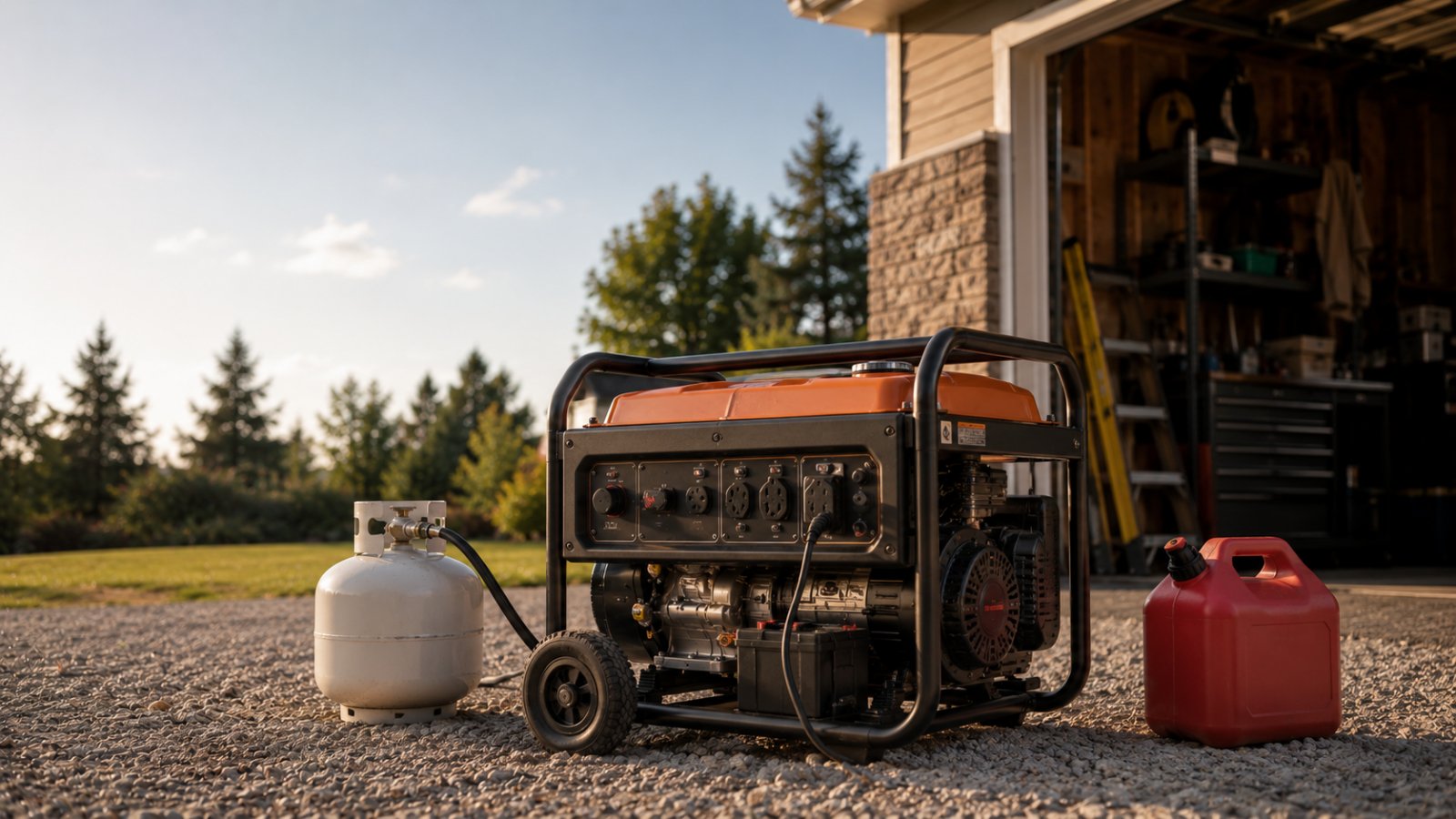
Best Dual-Fuel Generators of 2026
A dual-fuel generator solves the single most annoying problem with backup power: fuel. Run out of gasoline during an outage — when every station in town is dark or mobbed — and a gas-only generator is a paperweight. A dual-fuel model runs on either gasoline or propane, so you can keep a propane tank (which stores for years without going stale) on standby and never worry about finding fuel mid-emergency. It’s the most flexible, prep-friendly kind of generator you can buy.
Here are the best dual-fuel generators of 2026, from wallet-friendly workhorses to high-power home-backup machines.
Quick picks: for the best all-around home backup, the Westinghouse WGen9500DF delivers big power, a remote start, and great value. For quiet, clean dual-fuel power, the Champion 4500-Watt Dual Fuel Inverter is superb. And for maximum output, the DuroMax XP13000EH is a beast.
Note: All fuel-burning generators produce carbon monoxide and must be run outdoors only, far from windows and doors. Use a transfer switch (installed by an electrician) to power home circuits.
Best dual-fuel generators at a glance
|
Generator |
Running / peak (gas) |
Type |
Noise |
Best for |
Typical price |
|---|---|---|---|---|---|
|
Westinghouse WGen9500DF |
9,500 / 12,500 W |
Conventional |
~72 dBA |
Best overall home backup |
~$1,000–$1,200 |
|
Champion 4500 Dual Fuel Inverter |
3,500 / 4,500 W |
Inverter |
~61 dBA |
Best quiet/clean power |
~$900–$1,100 |
|
DuroMax XP13000EH |
10,500 / 13,000 W |
Conventional |
~74 dBA |
Best high-power |
~$1,500–$1,800 |
|
Predator 9500 Dual Fuel |
7,250 / 9,500 W |
Conventional |
~70 dBA |
Best value |
~$800–$1,000 |
|
Westinghouse iGen4500DF |
3,700 / 4,500 W |
Inverter |
~52 dBA |
Best quiet value |
~$1,000–$1,200 |
|
Champion 201123 Tri-Fuel |
8,500 / 10,500 W |
Conventional |
~72 dBA |
Best fuel flexibility |
~$1,300–$1,600 |
Why buy a dual-fuel generator?
Fuel flexibility and security. The headline benefit: you’re never stranded by a fuel shortage. Gasoline is convenient and available; propane is storable and often on hand for grills and heaters. Having both options is genuine peace of mind in an emergency.
Propane stores forever. Gasoline degrades in months and gums up carburetors; propane stores indefinitely without going stale. For a generator that sits unused between emergencies, keeping propane on standby means it’s always ready to run — no fuel-stabilizer routine required.
Cleaner burning on propane. Propane burns cleaner than gasoline, producing fewer emissions and less engine gunk, which can mean easier maintenance over time.
Flexibility in output. Generators typically produce slightly more power on gasoline than propane, so you can run on gas when you need maximum output and propane for clean, storable convenience. We cover the trade-offs fully in Propane vs Gas Generator.
The best dual-fuel generators of 2026
Westinghouse WGen9500DF — Best overall for home backup
The WGen9500DF is the dual-fuel home-backup benchmark. With 9,500 running watts (12,500 peak) on gasoline, it can power most of a home’s essentials and then some — fridge, furnace, well pump, sump pump, and plenty of outlets — and its remote electric key-fob start makes firing it up effortless. Add reliable build quality and a very reasonable price, and it’s the unit most homeowners should buy for serious portable backup. Connect it to your panel via a transfer switch and it covers an impressive range of loads.
Best for: Most homeowners wanting powerful, affordable whole-home-essentials backup.
Champion 4500-Watt Dual Fuel Inverter — Best quiet and clean power
If you want dual-fuel flexibility plus quiet, electronics-safe power, this Champion is the pick. As an inverter generator it produces clean power for laptops, TVs, and sensitive appliances, runs far quieter than conventional units, and sips fuel by matching engine speed to load — all while offering the gas-or-propane choice. With 3,500 running watts and an electric start, it’s ideal for quieter essentials backup, and it also stars in our inverter roundup.
Best for: Quiet, clean essentials backup with fuel flexibility.
DuroMax XP13000EH — Best high-power
When you want to run nearly everything, the XP13000EH brings the muscle: 10,500 running watts (13,000 peak) from a big, rugged engine, with dual-fuel capability and enough output for a large home’s essentials plus heavy loads like central AC or a large well pump. It’s loud and thirsty, as big conventional generators are, but for maximum portable power on gas or propane, it’s hard to beat.
Best for: Large homes and heavy loads needing maximum portable output.
Predator 9500 Dual Fuel — Best value
Harbor Freight’s Predator line has earned a strong reputation, and the 9500 Dual Fuel is a standout value: 7,250 running watts (9,500 peak), electric start, and dual-fuel capability at a price that regularly undercuts the competition. For homeowners who want big backup power on a budget and don’t mind a no-frills package, it delivers remarkable bang for the buck.
Best for: Budget-minded buyers wanting big dual-fuel power.
Westinghouse iGen4500DF — Best quiet value
The dual-fuel inverter version of a home-backup favorite: 3,700 running watts, whisper-ish 52 dBA operation, remote start, and clean power — now with gas-or-propane flexibility. It’s the value choice for anyone who wants quiet, electronics-safe backup without paying Honda money, and the propane option means it’s always ready after months in storage.
Best for: Quiet, clean, affordable dual-fuel essentials backup.
Champion 201123 Tri-Fuel — Best fuel flexibility
For the ultimate in flexibility, this Champion runs on three fuels — gasoline, propane, and natural gas. Hook it to your home’s natural gas line and you get near-unlimited runtime like a standby generator, but in a portable, movable package, with gas and propane as backups. With 8,500 running watts, it’s a versatile powerhouse for serious preppers and homeowners who want every fueling option covered.
Best for: Maximum fuel flexibility, including a natural gas hookup.
How to choose a dual-fuel generator
Match the wattage to your needs. Essentials backup: 3,500–5,000 running watts. Whole-home-essentials: 7,000–9,500. Large homes/heavy loads: 10,000+. Account for motor startup surges. See What Size Generator Do I Need to Run My House?.
Inverter or conventional? Inverter dual-fuel units (Champion 4500, iGen4500DF) are quieter and produce clean power for electronics but cost more per watt and top out lower. Conventional dual-fuel units (WGen9500DF, DuroMax) deliver more raw power for less money but are louder and less electronics-friendly.
Consider a remote/electric start. For a backup generator you’ll start in bad weather, an electric or remote start is a genuine convenience.
Plan your fuel storage. The whole point of dual-fuel is having propane ready. Keep a full tank (or two) on hand so you’re never caught short.
Dual-fuel vs single-fuel: is it worth the extra?
Dual-fuel generators usually cost a little more than equivalent gas-only models, so is the flexibility worth it? For home backup, almost always yes. The modest premium buys genuine insurance against a fuel shortage: if gas stations are closed or mobbed during a widespread outage, you switch to the propane tank you’ve had stored for years. And because propane doesn’t degrade, a dual-fuel generator kept on propane is always ready — no stale-gas carburetor problems after months of sitting idle.
For a generator you’ll use frequently (camping, job sites), a single gas-fuel model may be simpler and cheaper, since you’re cycling fuel regularly anyway. But for the classic use case — a backup generator that sits until an emergency — dual-fuel’s storage flexibility and readiness make it the smarter buy for most homeowners. The small upfront premium is easily justified the first time you’re glad you had propane on hand when gas ran short.
Limitations and who this isn’t for
Dual-fuel flexibility is handy, but output usually drops on propane versus gasoline, and you still get engine noise, maintenance and exhaust that is deadly indoors. Cheaper models vary in build quality and runtime. Decide which fuel you will actually rely on, check the rated watts on that fuel, and never run any generator in an enclosed space.
How we source this guide: capacities, runtimes and prices are drawn from manufacturer documentation and reputable public sources and can change. Always confirm current specifications and pricing on the manufacturer’s website before buying.
Frequently asked questions
What is the best dual-fuel generator in 2026? For most home backup, the Westinghouse WGen9500DF — strong power, remote start, and great value. For quiet clean power, the Champion 4500 Dual Fuel Inverter; for maximum output, the DuroMax XP13000EH; and for value, the Predator 9500.
Is a dual-fuel generator worth it? Yes, for most buyers. The ability to run on gas or propane means you’re never stranded by a fuel shortage, and propane’s indefinite storage makes a dual-fuel generator ideal for backup use that sits unused between emergencies.
Is gas or propane better for a dual-fuel generator? Gasoline usually gives slightly more power and is convenient; propane stores indefinitely, burns cleaner, and is ideal for standby use. Many owners run propane for storage-ready backup and gas when they need maximum output. See our full propane vs gas comparison.
How much power does a dual-fuel generator lose on propane? Typically around 10% less running on propane than on gasoline, due to propane’s lower energy density. It’s a modest trade-off for the storage and convenience benefits.
Can a dual-fuel generator power my whole house? A large one (9,500+ running watts) can run most of a home’s essentials and some heavy loads through a transfer switch. For automatic whole-home backup, a permanently installed standby generator is the better fit.
Are dual-fuel generators worth the extra cost? For home backup, usually yes. The modest premium buys fuel-shortage insurance and propane’s indefinite storage, so your generator is always ready. For frequent everyday use where you cycle fuel anyway, a gas-only model may suffice.
Can I convert a gas generator to dual-fuel? Some gas generators can be converted with an aftermarket propane/tri-fuel kit, but it can affect your warranty and isn’t always reliable. For most buyers, purchasing a factory dual-fuel model is the safer, simpler choice.
Does propane damage a generator? No — propane actually burns cleaner than gasoline, producing less engine deposit buildup. It’s gentle on the engine and can mean easier maintenance over time, one of propane’s advantages for standby use.
The bottom line
A dual-fuel generator is the most flexible, emergency-ready portable power you can own — run it on gasoline for convenience and maximum output, or propane for clean, storable, always-ready backup. The Westinghouse WGen9500DF is the best all-around home-backup choice, the Champion 4500 Dual Fuel Inverter delivers quiet clean power, and the DuroMax XP13000EH brings the muscle for big homes. Size it to your needs, keep propane on hand, run it safely outdoors, and you’ll never be left in the dark for lack of fuel.