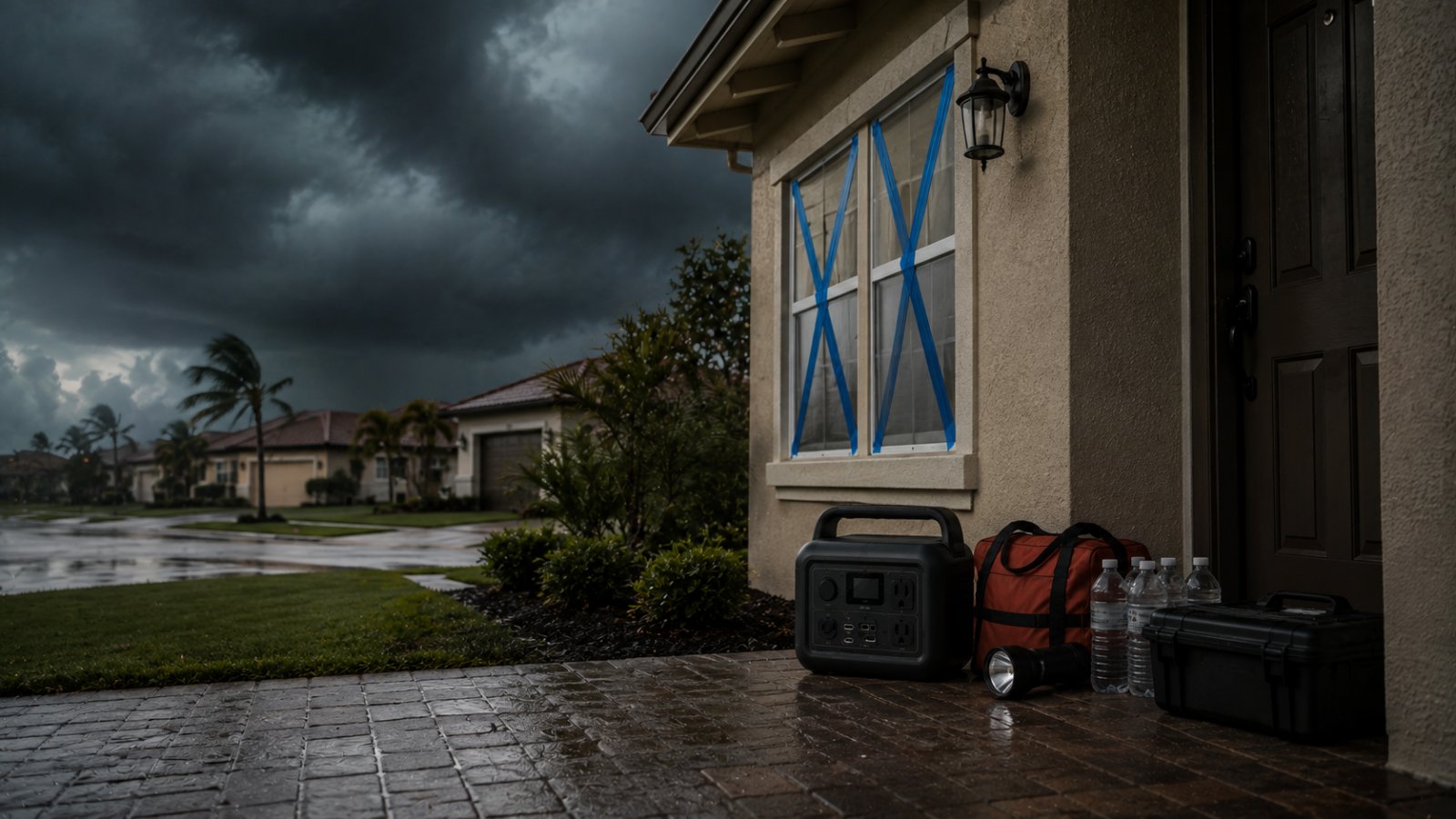
Hurricane Power Outage Prep: The Complete Guide
Hurricanes cause the longest, most widespread power outages in America — and they’re getting worse. In 2024, Hurricanes Beryl, Helene, and Milton drove 80% of the entire country’s outage hours, with some areas losing power for days or weeks. If you live in a hurricane zone, preparing for a multi-day (or multi-week) outage isn’t paranoia — it’s the realistic baseline. This complete guide walks you through hurricane power outage prep, from before the season starts to after the storm passes.
The core truth: hurricane outages last days, not hours, so your prep has to go beyond flashlights and a cooler. Reliable, long-duration backup power is the single most important investment you can make.
Before hurricane season: set your foundation
The work you do before a storm is ever on the horizon is what keeps you safe when one arrives. Ideally, do this in the spring, before June:
- Invest in backup power sized for multi-day outages. This is the big one. A hurricane can knock out power for a week, so you want either a generator (unlimited runtime with fuel — see Best Whole-House Generators of 2026) or a solar generator / battery system that recharges from the sun day after day (see Best Solar Generators of 2026). A small power bank won’t cut it for a week-long outage.
- Build your supply kit: two weeks of non-perishable food and water (a gallon per person per day), a battery/hand-crank radio, first-aid kit, medications, and hygiene supplies.
- Trim trees and secure your property — falling limbs are a top cause of outages and damage.
- Digitize and protect documents — insurance, IDs, medical records — in waterproof storage and the cloud.
- Make a family emergency and evacuation plan, including where you’ll go and how you’ll communicate.
- Know your zone — evacuation routes and whether you’re in a flood or storm-surge area.
72 hours before landfall: final prep
Once a storm is forecast for your area, shift into action mode:
- Charge everything. Top off your power station, phones, power banks, laptops, and device batteries to 100%.
- Fuel up. Fill your car’s gas tank, and stock fuel (gasoline or propane) for your generator — stations shut down when the power goes out.
- Store water. Fill bathtubs, jugs, and containers; freeze water jugs to help keep food cold and provide drinking water.
- Prep your fridge and freezer. Turn them to the coldest setting and group frozen items together.
- Secure outdoor items — furniture, grills, anything that could become a projectile.
- Get cash in small bills, since ATMs and card readers fail without power.
- Refill prescriptions and gather medical supplies.
- Fully charge or fuel your backup power system and test that it works.
During the storm and outage
When the storm hits and the power goes out:
- Shelter in the safest part of your home — an interior room away from windows, on the lowest floor that isn’t at flood risk.
- Switch to backup power for your essentials — fridge, medical devices, phones, Wi-Fi, and fans. Prioritize what matters most.
- Run generators outdoors only, at least 20 feet from the house — carbon monoxide from generators kills people every hurricane season. Battery power stations are safe indoors.
- Keep the fridge and freezer closed — a full freezer holds for about 48 hours (see How to Keep Food Cold During a Power Outage).
- Stay informed via a battery radio and conserve your phone battery.
- Stay off the roads and away from flooded areas — never drive or walk through floodwater.
After the storm: recovery and safety
The danger doesn’t end when the wind stops:
- Assume every downed power line is live — stay far away and report it. Don’t touch anything the line is touching.
- Avoid floodwater, which can hide downed lines, debris, and contamination.
- Keep running your generator safely outdoors — most CO deaths happen after the storm, during the long outage.
- Check your food against the 40°F rule and discard anything unsafe.
- Recharge your backup power whenever possible (solar is invaluable here, since fuel and grid power may be scarce).
- Document any damage with photos for insurance before cleaning up.
- Check on neighbors, especially older adults and those with medical needs.
Why solar backup shines in hurricanes
One hard lesson from every major hurricane: fuel runs out. Gas stations lose power, propane sells out, and generators go quiet. This is exactly where a solar generator or solar-plus-battery system proves its worth — it recharges from the sun every day, so it keeps working through a multi-day outage when fuel-dependent generators fail. Many hurricane-zone homeowners pair a generator (for immediate heavy loads) with solar and batteries (for silent, renewable, indefinite power). See How to Power a House During a Blackout for the full comparison.
Important safety notes
Storm situations change fast and every home is different, so use this alongside official forecasts and evacuation orders, not instead of them. Prepare days ahead — fuel, water, medications, cash and device charging — because supplies vanish before landfall. Never run a generator indoors, and if authorities order an evacuation, leave. This is general information, not emergency instruction.
This guide is general information, not professional, legal or medical advice. During an outage, follow guidance from your utility and local authorities, keep fuel-burning generators outdoors and away from windows, and seek professional help for medical power needs.
Frequently asked questions
How do I prepare for a power outage during a hurricane? Before the season, invest in multi-day backup power and build a two-week supply kit. Within 72 hours of landfall, charge everything, fuel up, store water, and prep your fridge. During the outage, run essentials on backup power, keep the fridge closed, and run generators outdoors only.
How long do hurricane power outages last? They can last days to weeks. In 2024, hurricanes drove 80% of the nation’s outage hours, with hard-hit areas losing power for a week or more. Plan for at least several days, and ideally two weeks, of self-sufficiency.
What’s the best backup power for a hurricane? For multi-day outages, a generator (unlimited runtime with fuel) or a solar generator/battery system (recharges from the sun when fuel runs out). Many homeowners use both. Small power banks are not enough for hurricane-length outages.
How much water should I store for a hurricane? At least one gallon per person per day for two weeks, since hurricane outages and supply disruptions can be prolonged. Fill bathtubs and containers before landfall as backup for washing and flushing.
Is it safe to run a generator during a hurricane? Only outdoors, at least 20 feet from the house and away from windows — never in a garage or enclosed space. Carbon monoxide from generators is a leading cause of post-hurricane deaths. Keep it dry and elevated, away from flooding.
The bottom line
Hurricane power outage prep is about planning for the long outage, not the short one. Before the season, invest in backup power that can last days — a generator, a solar-plus-battery system, or both — and build a two-week supply kit. In the final 72 hours, charge and fuel everything and store water. During and after, run essentials on backup power, keep generators safely outdoors, and stay clear of downed lines and floodwater. With hurricanes causing longer outages every year, the households that prepare for a week without power are the ones who ride out the storm in safety and relative comfort.