EcoFlow River 3 Review: Best Small Power Station?
Verdict up front: the EcoFlow River 3 is the best small power station you can buy for the money in 2026. For around $199 you get a genuine LiFePO4 battery, a whisper-quiet design, ~1-hour recharging, and enough power to run a CPAP, laptop, lights, and phones through a night or a weekend. It won’t run appliances, but that’s not its job — as a compact, affordable, everyday backup and camping companion, it’s superb.
EcoFlow’s River line has always been about compact, affordable power, and the River 3 refines the formula with LiFePO4 chemistry and a rock-bottom price. We dug into the specs and real-world use to answer the question: is this the best small power station of 2026?
EcoFlow River 3 specs
|
Spec |
EcoFlow River 3 |
|---|---|
|
Capacity |
245 Wh |
|
Battery chemistry |
LiFePO4 (LFP) |
|
Rated AC output |
300 W |
|
X-Boost |
Up to 600 W |
|
Weight |
~7.5 lb (3.4 kg) |
|
AC recharge (0–100%) |
~1 hour |
|
Max solar input |
110 W |
|
UPS switchover |
<20 ms |
|
Noise |
<30 dB (near-silent) |
|
Rating |
IP54 (battery pack) |
|
Ports |
6 outputs: AC, USB-A, USB-C, DC |
|
Cycle life |
3,000+ cycles |
|
Warranty |
5 years |
|
Typical price |
~$199 (reg. $239) |
Who the River 3 is for
The River 3 is a compact essentials unit — not a home-backup powerhouse, and it doesn’t pretend to be. With a 245 Wh battery and a 300 W inverter (600 W via X-Boost), it’s built to run the small stuff: phones, laptops, a CPAP, lights, a fan, a router, cameras, and small electronics. Think of it as a giant, silent power bank for a night of camping, a laptop desk during an outage, or a bedside CPAP backup. At ~$199, it’s an easy, low-risk first power station or a handy secondary unit.
Design and build
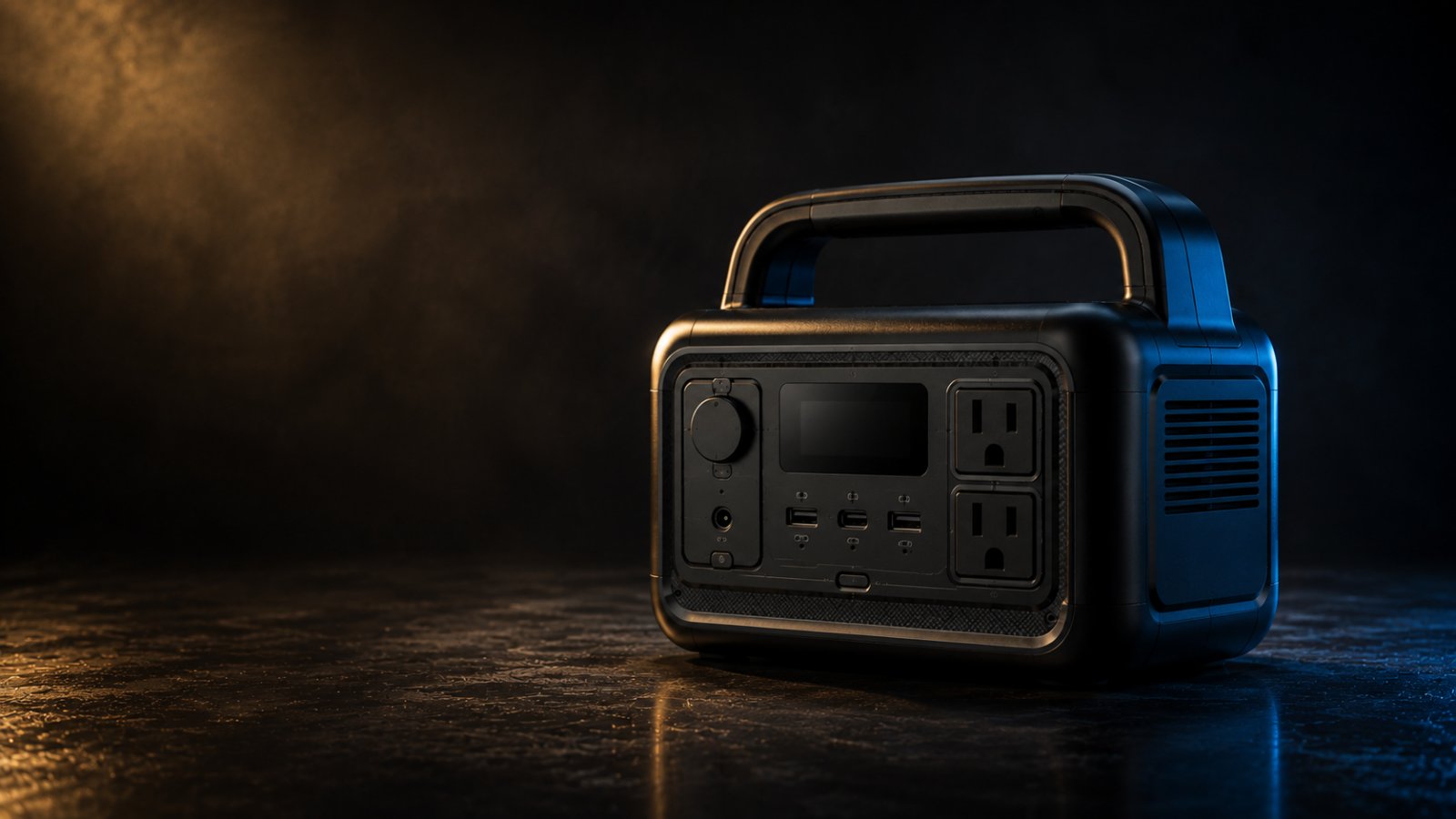
For a small unit, the River 3 feels well-made. At ~7.5 pounds it’s genuinely portable — one-hand carryable — and compact enough to tuck into a bag or sit on a desk. It runs near-silently (under 30 dB), which matters for bedside or tent use, and the battery pack carries an IP54 rating for some dust and splash resistance. The layout offers 6 simultaneous outputs (an AC outlet, USB-A, USB-C, and DC), covering the mix of devices you’d actually plug into a unit this size. EcoFlow’s fit and finish are up to their usual standard.
Real-world performance
The 300 W inverter (600 W X-Boost) defines what the River 3 can do. It comfortably runs:
- A CPAP (humidifier off): a full night (~6 hours)
- A laptop (60 W): ~3.5 hours, or multiple recharges
- Phones: ~20+ full charges
- LED lights and a fan: all evening
- A router/modem: several hours of internet backup
- A mini-fridge (short term): a few hours
Where it stops is anything high-wattage: no microwaves, no heaters, no coffee makers — the 300 W output (even boosted to 600 W) isn’t for appliances. But for the electronics and small devices that make up most people’s real needs, it delivers, and its <20 ms UPS switchover makes it a genuine backup for a laptop or CPAP that can’t afford to blink off.
Charging
Charging is a River 3 strength. From a wall outlet, it refills 0–100% in about an hour — impressively fast, so you can top it off quickly before heading out or between uses. It accepts up to 110 W of solar, recharging in roughly 2.6 hours in good sun with a matching panel, which makes it a capable little off-grid companion for camping. There’s also car charging for topping up on the drive.
App and features
The River 3 works with EcoFlow’s excellent app over Bluetooth/Wi-Fi, letting you monitor charge, adjust settings, toggle X-Boost, and update firmware — the same polished software experience as EcoFlow’s bigger units, which is impressive at this price. The UPS function and quiet operation round out a feature set that punches above the unit’s cost.
Living with the River 3: real-world notes
In everyday use, the River 3 earns its keep as the unit you grab without thinking. It’s light enough to move room to room, quiet enough to sit on a nightstand running a CPAP, and small enough to live in a closet or a car trunk until you need it. The ~1-hour recharge means you rarely have to plan ahead — plug it in over lunch and it’s full. The app is a nice touch at this price, letting you check the charge and tweak settings from the couch, though the clear front display means you often won’t bother.
The honest limitation is capacity: at 245 Wh, it’s a top-up-and-go unit, not something you set and forget for days. You’ll recharge it more often than a bigger station, and it won’t carry you through a long outage on its own. But for its intended jobs — a night’s CPAP, a workday’s laptop and Wi-Fi, a weekend of phones and lights, a car-camping trip — it does exactly what you need with zero fuss.
Pros and cons
Pros
- Excellent price (~$199) for a LiFePO4 unit
- Fast ~1-hour recharging
- Near-silent (<30 dB) — great for bedside/tent use
- <20 ms UPS mode for backup
- Solar-capable and app-controlled
- Light and genuinely portable
Cons
- Small 245 Wh capacity (essentials only)
- 300 W output (600 W boosted) — no appliances
- 110 W max solar limits off-grid recharge speed
- No expandability (unlike the River 3 Plus)
River 3 vs River 3 Plus: which should you get?
The main question for buyers. The River 3 Plus steps up to 286 Wh and a 600 W inverter (1,200 W X-Boost), and — crucially — is expandable to a larger capacity, for around $219–$259. If you want a bit more power and the option to grow, the Plus is worth the small premium. If you just need the essentials at the lowest price, the base River 3 at ~$199 is the better value. Both are excellent small units; the Plus is more flexible, the base is cheaper.
Who should buy the EcoFlow River 3?
Buy it if you want an affordable, compact, silent unit for CPAP backup, a laptop desk, camping, or keeping phones and small devices alive during outages. It’s an ideal first power station and a great secondary unit. Skip it if you need to run any appliance (fridge for long, microwave, heater) or want home-backup capacity — for that, step up to a 1,000 Wh unit like the EcoFlow Delta 2. See Best Budget Portable Power Station Under $500 for larger budget options.
Limitations and who this isn’t for
This overview is based on manufacturer specifications and public information, not our own testing, so treat runtime and recharge figures as ratings. The River 3 is a small-capacity unit aimed at phones, laptops, lights and short essentials — not fridges for long or any 240V load. Confirm the current price, battery warranty and real usable capacity before buying.
How we source this guide: capacities, runtimes and prices are drawn from manufacturer documentation and reputable public sources and can change. Always confirm current specifications and pricing on the manufacturer’s website before buying.
Frequently asked questions
Is the EcoFlow River 3 worth it? For a compact essentials unit, absolutely. At ~$199 you get a LiFePO4 battery, fast charging, near-silent operation, and UPS mode — excellent value for running a CPAP, laptop, lights, and phones. It’s only “not worth it” if you need to power appliances, which it isn’t built for.
What can the EcoFlow River 3 run? Phones, laptops, a CPAP (humidifier off), lights, a fan, a router, and small electronics. Its 300 W output (600 W X-Boost) rules out appliances like microwaves, heaters, and coffee makers.
How long does the EcoFlow River 3 last? It depends on the load: a full night for a CPAP, ~3.5 hours for a laptop, 20+ phone charges, or all evening for lights. Its 245 Wh suits a night or weekend of small-device use.
Does the EcoFlow River 3 use LiFePO4? Yes. It uses a LiFePO4 (LFP) battery rated for 3,000+ cycles, backed by a 5-year warranty — long-lasting chemistry that’s impressive at its low price.
Should I buy the River 3 or River 3 Plus? Get the base River 3 (~$199) for the lowest price and essentials-only use. Get the River 3 Plus (~$219–$259) for more output (600 W) and expandability. Both are excellent small units; the Plus offers more room to grow.
How many times can the River 3 charge a phone? Roughly 20 or more full phone charges from its 245 Wh battery, making it an excellent unit for keeping devices alive during an outage or a camping trip.
Can the EcoFlow River 3 be charged by solar? Yes, it accepts up to 110 W of solar input and recharges in about 2.6 hours with a matching panel in good sun — enough to keep it topped up for off-grid camping and multi-day use.
The bottom line
The EcoFlow River 3 is the best small power station of 2026 for the money — a genuine LiFePO4 unit with fast charging, near-silent operation, UPS mode, and solar capability, all for around $199. It’s not for appliances, but for the phones, laptops, CPAPs, and small devices that make up most people’s everyday backup and camping needs, it delivers beautifully. As a first power station, a bedside CPAP backup, or a compact camping companion, it’s an easy, low-risk recommendation — and a lot of capability for very little money.