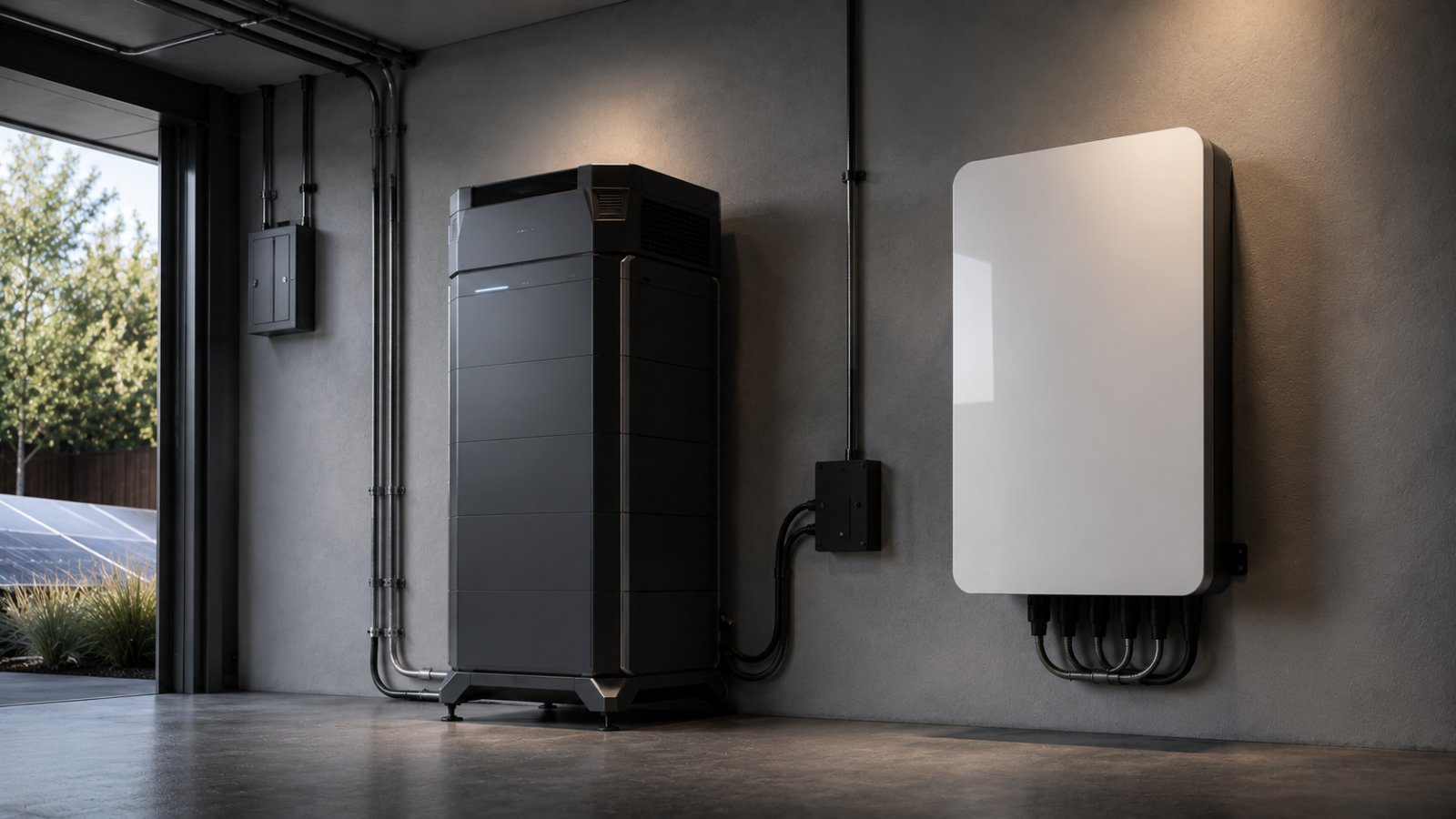
EcoFlow Delta Pro Ultra vs Tesla Powerwall: Whole-Home Backup
For years, “whole-home battery backup” essentially meant one thing: a Tesla Powerwall. But EcoFlow’s Delta Pro Ultra has crashed that party with a fundamentally different pitch — comparable whole-home capability, dramatically lower cost per kWh, and far less permanent installation. So which one should power your home through the next outage?
We put the EcoFlow Delta Pro Ultra head-to-head with the Tesla Powerwall 3 across everything that matters for whole-home backup. Both are excellent; they’re built for different buyers.
Note: Cost figures here are general information, not financial advice. The 30% federal tax credit ended after 2025; confirm current incentives locally.
The quick verdict
- Tesla Powerwall 3 wins for a polished, seamless, professionally installed whole-home system with the best app and cleanest solar integration.
- EcoFlow Delta Pro Ultra wins on value, flexibility, and lower installation burden — similar capability for far less per kWh, with grid and solar charging.
- If money is no object and you want the most refined installed system, get the Powerwall. If value and flexibility matter, the Delta Pro Ultra is a genuinely compelling alternative.
Specs head-to-head
|
Spec |
EcoFlow Delta Pro Ultra |
Tesla Powerwall 3 |
|---|---|---|
|
Capacity per unit |
6.1 kWh |
13.5 kWh |
|
Max capacity |
~90 kWh (stacked) |
54 kWh (4 units) |
|
Continuous power |
7.2 kW (21.6 kW stacked) |
11.5 kW |
|
240V split-phase |
Yes |
Yes |
|
Chemistry |
LiFePO4 |
LiFePO4 |
|
Solar inverter |
Yes (high solar input) |
Yes (integrated) |
|
Grid charging |
Yes |
Yes |
|
Installation |
Minimal / DIY-friendly |
Professional required |
|
Warranty |
5 years |
10 years |
|
Cost |
~$4,100+ per unit |
~$13,000–$16,500 installed |
Round 1: Capacity and scalability — EcoFlow wins
Both scale, but differently. The Powerwall 3 uses big 13.5 kWh blocks, stacking up to four units for 54 kWh. The Delta Pro Ultra uses smaller 6.1 kWh modules but scales much higher — up to around 90 kWh across stacked inverters. That gives EcoFlow the edge for very large homes or serious multi-day/off-grid resilience, and its smaller modules let you fine-tune capacity more granularly.
Winner: EcoFlow — higher ceiling and more granular scaling.
Round 2: Power output — Tesla wins (per unit)
Raw power per unit goes to Tesla: the Powerwall 3’s 11.5 kW from a single box is higher than the Delta Pro Ultra’s 7.2 kW per inverter, meaning one Powerwall can start and run more of a home at once. Stack multiple EcoFlow inverters (to 21.6 kW) and it surpasses a single Powerwall, but unit-for-unit, Tesla delivers more instantaneous muscle — handy for big motor loads.
Winner: Tesla per unit; EcoFlow pulls ahead when stacked.
Round 3: Installation — EcoFlow wins big
This is the Delta Pro Ultra’s killer advantage. The Powerwall 3 requires professional installation — a certified electrician, a backup gateway, permits, and a chunk of the total cost going to labor. The Delta Pro Ultra is designed to need far less permanent electrical work, and can even be set up in more DIY-friendly configurations. That means lower total cost, faster setup, and more flexibility (you can move it, take it when you move house, or reconfigure it). For anyone who balks at a big installation project, EcoFlow is the clear winner.
Winner: EcoFlow — dramatically less installation burden.
Round 4: Cost and value — EcoFlow wins
The numbers aren’t close on value. A Powerwall 3 runs $13,000–$16,500 installed for 13.5 kWh. A Delta Pro Ultra unit (inverter plus a battery) starts around $4,100, and even a multi-battery configuration for similar capacity typically costs far less all-in — with much lower installation cost on top. On a cost-per-kWh basis, EcoFlow substantially undercuts Tesla, a gap that matters even more now that the 30% federal tax credit is gone. If value is your priority, EcoFlow wins decisively.
Winner: EcoFlow — much lower cost per kWh.
Round 5: Solar integration and ecosystem — Tesla wins
Tesla’s polish shows here. The Powerwall 3’s integrated solar inverter makes solar-plus-storage installs exceptionally clean, and its app is the best in the business — real-time energy flow, Storm Watch, seamless time-of-use automation, and a mature, refined experience. EcoFlow supports solar and grid charging well and has a good app, but Tesla’s ecosystem and solar integration are more seamless and battle-tested.
Winner: Tesla — cleaner solar integration and a superior app.
Round 6: Backup seamlessness — Tesla (slightly)
Both provide automatic backup, but the Powerwall 3’s whole-home switchover is famously instant and invisible, backed by years of refinement. The Delta Pro Ultra also switches automatically and quickly, but Tesla’s installed, gateway-managed system is the gold standard for truly seamless whole-home transitions.
Winner: Tesla — the benchmark for seamless whole-home backup.
Round 7: Warranty — Tesla wins
Tesla backs the Powerwall 3 with a 10-year warranty (70% capacity retention, unlimited cycles), longer than EcoFlow’s typical 5-year coverage on the Delta Pro Ultra. For a long-term home fixture, that extra warranty length is meaningful peace of mind.
Winner: Tesla — longer warranty.
Real-world buying scenarios
To make the choice concrete, here’s how it plays out for different homeowners:
“I’m installing solar and want the cleanest whole-home system.” The Powerwall 3’s integrated inverter and seamless integration make it the natural fit — the solar-plus-storage install is simpler and more polished.
“I want whole-home backup but the Powerwall quotes gave me sticker shock.” The Delta Pro Ultra delivers comparable capability for far less per kWh and much lower installation cost. This is its sweet spot.
“I rent, or I might move in a few years.” EcoFlow’s less-permanent, more-portable setup means you’re not leaving a five-figure fixture behind. The Powerwall is a permanent home improvement.
“I want the absolute most seamless, hands-off experience and best app.” Tesla’s ecosystem is more refined and battle-tested; if that polish is worth the premium, the Powerwall wins.
“I want to back up a home without solar, on a budget.” The Delta Pro Ultra grid-charges and scales affordably — a strong no-solar whole-home option.
Cost of ownership over 10 years
Zoom out to the full ownership window and the value gap widens. Both systems run on cheap grid power or free solar and need almost no maintenance, so ongoing costs are similar and low. The difference is upfront: with the Delta Pro Ultra costing dramatically less per kWh and far less to install, its 10-year total cost of ownership comes in well below a comparable Powerwall setup — money that stays in your pocket or buys more capacity. The Powerwall’s longer 10-year warranty narrows the reliability gap, but on pure dollars over a decade, EcoFlow’s value lead holds. It’s why so many 2026 buyers who once defaulted to Tesla now shortlist the Delta Pro Ultra.
Which should you buy?
Buy the Tesla Powerwall 3 if: you want the most polished, seamless, professionally installed whole-home system; you’re adding solar and value the integrated inverter; you prize the best app and a 10-year warranty; and the higher cost fits your budget. It’s the premium, refined choice.
Buy the EcoFlow Delta Pro Ultra if: you want whole-home capability at a far lower cost per kWh; you’d rather avoid a big permanent installation; you value flexibility and higher scalability; or you’re backing up a home without solar and want grid-charged resilience on a budget. It’s the value and flexibility champion.
For where each lands against the wider field, see Best Home Battery Backup Systems of 2026, and for the full Tesla breakdown, our Tesla Powerwall 3 Review.
Limitations and who this isn’t for
These two serve different buyers, so it isn’t a like-for-like race. The Delta Pro Ultra is a modular, largely plug-in system you can expand and even relocate; the Powerwall is a fixed, professionally installed home fixture. Your electrician, local permitting rules and whether you value portability matter as much as the raw specs.
How we source this guide: capacities, runtimes and prices are drawn from manufacturer documentation and reputable public sources and can change. Always confirm current specifications and pricing on the manufacturer’s website before buying.
Frequently asked questions
Is the EcoFlow Delta Pro Ultra a good Powerwall alternative? Yes. It offers comparable whole-home backup capability — 240V output, high capacity (to 90 kWh), grid and solar charging — at a substantially lower cost per kWh and with far less installation. It’s one of the strongest Powerwall alternatives in 2026.
Which is cheaper, the Delta Pro Ultra or the Powerwall 3? The Delta Pro Ultra is significantly cheaper, both per unit (starting around $4,100 vs $13,000–$16,500 installed for a Powerwall 3) and on a cost-per-kWh basis, especially after factoring in lower installation costs.
Does the Delta Pro Ultra do whole-home backup like a Powerwall? Yes. It provides 240V split-phase output and scales to whole-home capacity, backing up your entire home. The Powerwall offers more seamless, gateway-managed integration, but the Delta Pro Ultra delivers genuine whole-home backup.
Which has better solar integration? The Powerwall 3, thanks to its integrated solar inverter and mature ecosystem, offers cleaner solar-plus-storage integration. The Delta Pro Ultra supports solar well but is less seamless.
Which lasts longer? Both use durable LiFePO4 chemistry. Tesla offers a longer 10-year warranty versus EcoFlow’s typical 5 years, though both are built for many years of service.
Is the Delta Pro Ultra as reliable as a Powerwall? Both use durable LiFePO4 chemistry and provide dependable whole-home backup. Tesla offers a longer 10-year warranty and a more mature ecosystem, while EcoFlow backs its system for 5 years. Both are solid, established products.
Can the Delta Pro Ultra back up a whole house without professional installation? It requires far less permanent installation than a Powerwall and supports more flexible configurations, but connecting it for true whole-home 240V backup still benefits from an electrician and a transfer switch. It’s simpler and cheaper to install, not necessarily zero-install.
Which is better for off-grid use? The Delta Pro Ultra, thanks to its higher scalability (to 90 kWh), high solar input, and flexible, less-permanent setup, is better suited to off-grid and semi-portable use than the fixed, grid-tied Powerwall.
The bottom line
The EcoFlow Delta Pro Ultra vs Tesla Powerwall 3 choice comes down to value versus polish. The Powerwall 3 is the more refined, seamless, professionally installed system with the best app, cleanest solar integration, and a longer warranty — the premium pick. The Delta Pro Ultra delivers comparable whole-home backup for far less money and far less installation, with higher scalability and grid-plus-solar flexibility — the value pick, and an increasingly popular one now that the federal tax credit is gone. Decide whether you’re paying for Tesla’s polish or EcoFlow’s value, and either way your home rides out the next outage in silence.