Best Portable Power Stations of 2026 (Reviewed & Ranked)
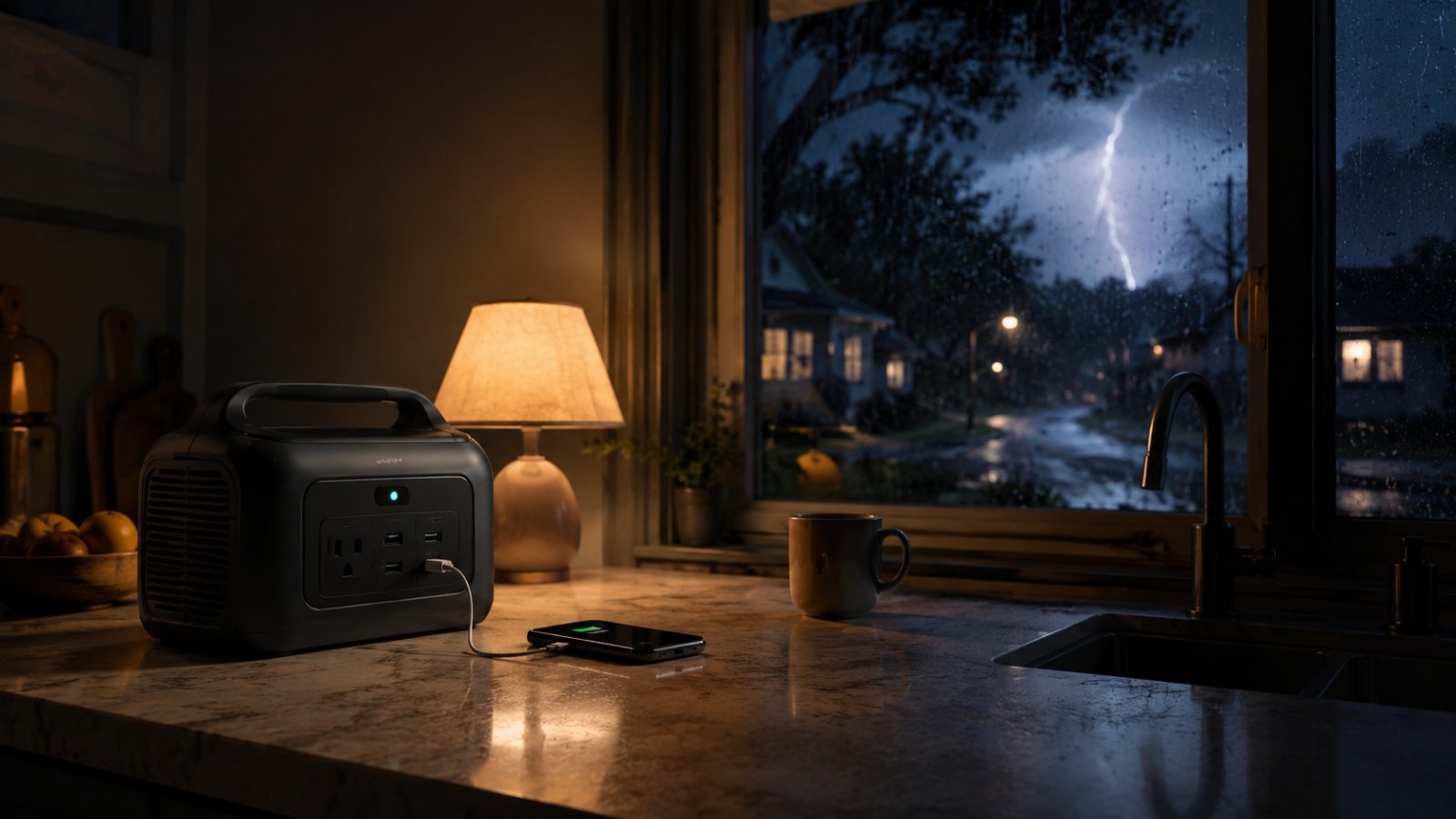
A good portable power station is one of those purchases that feels like a luxury right up until the power goes out — and then it feels like the smartest money you ever spent. Whether you’re keeping the fridge cold during a storm, running a CPAP in a tent, or just charging laptops at a tailgate, the right unit does it silently, indoors, with zero fumes.
The catch is choice overload: dozens of brands, spec sheets written to impress more than inform, and prices that swing by hundreds of dollars from one week to the next. So we cut through it. Below are the portable power stations worth your money in 2026, ranked by who they’re actually for — not by whoever paid for the top spot.
The short version: for most people, the EcoFlow Delta 3 hits the sweet spot of price, power, and fast charging. If you want the lightest unit that still runs real appliances, grab the Jackery Explorer 1000 v2. And if you’re arming your whole house for the next outage, jump to the Anker SOLIX F3800.
Top picks at a glance
| Power station | Capacity | AC output (surge) | Weight | Best for | Typical 2026 price |
|---|---|---|---|---|---|
| EcoFlow Delta 3 | 1,024 Wh | 1,800 W (3,600 W) | ~26 lb | Best overall | ~$499–$599 |
| Jackery Explorer 1000 v2 | 1,070 Wh | 1,500 W (3,000 W) | 24.4 lb | Best lightweight | ~$500–$600 |
| Bluetti AC200L | 2,048 Wh | 2,400 W (3,600 W) | 62 lb | Best expandable mid-size | ~$1,199–$1,299 |
| Anker SOLIX C1000 | 1,056 Wh | 1,800 W (2,400 W) | 28 lb | Best for UPS/electronics | ~$599–$799 |
| EcoFlow River 3 Plus | 286 Wh | 600 W (1,200 W) | ~9 lb | Best compact/budget | ~$199–$249 |
| Anker SOLIX F3800 | 3,840 Wh | 6,000 W (120/240V) | ~132 lb | Best home backup | ~$2,499–$2,999 |
Prices are approximate U.S. street prices as of 2026 and move around a lot — brands run big sales around Prime Day, Labor Day, and Black Friday.
How we ranked them
We’re not going to pretend we bench-tested all sixty units on the market. What we did do is weigh the specs that actually matter against real-world reviews, teardown data, and published expert coverage of these platforms. Four things drove the ranking:
Usable capacity, not just the number on the box. A “1,000 Wh” battery never gives you a full 1,000 watt-hours — inverter losses eat 10–15%. We favored units with honest, well-tested real-world output.
Battery chemistry. Every unit here uses LiFePO4 (lithium iron phosphate). It’s the standard in 2026 for good reason: 3,000–4,000+ charge cycles versus roughly 500 for the old NMC packs. That’s the difference between a battery that lasts a decade and one you replace in three years.
Output and surge. Continuous watts tell you what you can run; surge watts tell you whether the compressor in your fridge will actually kick on without tripping the unit.
Charging speed and expandability. The best modern stations refill in under an hour and let you bolt on extra batteries when your needs grow.
The best portable power stations of 2026
1. EcoFlow Delta 3 — Best overall
The Delta 3 is the unit we’d point most people toward, and it’s not particularly close. You get 1,024 Wh of LiFePO4 capacity and an 1,800 W inverter (with X-Boost muscling it up to run ~2,600 W appliances and a 3,600 W surge) — enough for a fridge, a microwave in short bursts, CPAPs, laptops, and power tools. The headline trick is charging: plug it into the wall and it hits 80% in about 50 minutes. That matters more than people expect, because when an outage warning hits, you want to top off fast.
It’s also quiet, has a clean app, sub-10ms UPS switchover (handy for a home office or a mini-fridge), and expands to 5 kWh if you add the Plus battery. At its regular ~$499–$599 street price, nothing else offers this blend of speed, capacity, and value.
Pros: Blazing fast charging, great value, quiet UPS mode, expandable. Cons: 1,800 W ceiling means no hair dryers or space heaters on high; app occasionally needs a firmware nudge.
Best for: Anyone who wants one do-everything unit for outages, camping, and everyday backup.
2. Jackery Explorer 1000 v2 — Best lightweight
If your power station is going to spend its life getting carried — to campsites, tailgates, job sites — the Explorer 1000 v2 is the one. At 24.4 pounds it’s noticeably lighter than the competition while still packing 1,070 Wh and a 1,500 W inverter (3,000 W surge). Jackery finally moved to LiFePO4 here, rated for a huge 4,000 cycles and backed by a 5-year warranty, and the wall-charge time dropped to roughly 1.5 hours.
It’s the friendliest unit on this list: the interface is idiot-proof, it looks good, and it’s the easiest recommendation to make for someone buying their first power station. The trade-off is a slightly lower 1,500 W output ceiling than the Delta 3, so heavy appliances are more limited. But for the money — often dipping to around $469 on sale — it’s a superb all-rounder.
Pros: Lightest in class, dead-simple to use, long warranty, frequent discounts. Cons: 1,500 W output caps big appliances; fewer expansion options than EcoFlow.
Best for: Campers, first-timers, and anyone who values portability over raw wattage.
3. Bluetti AC200L — Best expandable mid-size
Need more than a 1 kWh unit but not a 130-pound beast? The AC200L is the answer. It ships with 2,048 Wh and a genuinely stout 2,400 W inverter (3,600 W with Power Lifting), and it grows: add B300 expansion batteries and you can reach a staggering 8,192 Wh. There’s even a built-in 30A NEMA TT-30 RV outlet, which is why it’s a darling of the van-life crowd.
It’s heavy at 62 pounds and it’s not cheap, but the AC200L is a buy-once-cry-once unit. Fast AC charging (0–80% in about 45 minutes) and a 5-year warranty round out a package that scales from weekend camping to a serious multi-day outage.
Pros: Big 2 kWh capacity, huge expansion ceiling, built-in RV outlet, fast charging. Cons: Heavy; premium price; the app can be fiddly.
Best for: RVers, van lifers, and homeowners who want a mid-size unit they won’t outgrow.
4. Anker SOLIX C1000 — Best for electronics and UPS duty
Anker’s C1000 is the quiet overachiever. It matches the class with 1,056 Wh and an 1,800 W inverter (2,400 W SurgePad), but its party trick is charging speed — a full 0–100% in 58 minutes — and a rock-solid UPS mode that switches in around 20 milliseconds. That makes it a fantastic desktop backup for a home office, a NAS, or networking gear you can’t afford to have blink off.
Build quality is excellent, it’s reasonably portable at ~28 pounds, and it expands to 2,112 Wh with an add-on battery. When it dips under $700, it’s one of the best values in the category.
Pros: Superb build, ~1-hour full charge, excellent UPS, expandable. Cons: Slightly fewer AC outlets than rivals; best deals come and go.
Best for: Protecting sensitive electronics and anyone who wants a fast, reliable everyday backup.
5. EcoFlow River 3 Plus — Best compact and budget pick
Not everyone needs a kilowatt-hour. The River 3 Plus is small enough to toss in a backpack (~9 pounds) but still runs a 600 W inverter (1,200 W surge with X-Boost) off a 286 Wh LiFePO4 pack. It’ll keep phones, laptops, a CPAP, and small devices going for a night, recharges in about an hour, and costs a fraction of the big units.
For car camping, work trips, or a first “just in case” purchase, it’s the easiest sub-$250 recommendation we can make.
Pros: Ultra-portable, genuinely affordable, fast charge, LiFePO4. Cons: Small capacity; won’t run big appliances.
Best for: Weekenders, minimalists, and phone/laptop-first users.
6. Anker SOLIX F3800 — Best for whole-home backup
When “keep the phones charged” turns into “keep the house running,” you step up to the F3800. This is a different animal: 3,840 Wh, a 6,000 W inverter, and — crucially — 120V/240V split-phase output, so it can drive a well pump, a dryer, or an entire electrical panel through a transfer switch. Stack expansion batteries and you can push past 26 kWh.
It’s expensive and heavy (it has wheels for a reason), but for anyone in outage country who wants near-generator capability without the gas, noise, or carbon monoxide, nothing on this list comes close.
Pros: 240V output, massive capacity, whole-home capable, quiet. Cons: Pricey; heavy; overkill for casual users.
Best for: Homeowners planning serious, multi-day, whole-house backup.
How to choose: what actually matters
Capacity (Wh) = how long it runs. Watt-hours are your fuel tank. A 1,000 Wh unit runs a 60 W device for roughly 14–16 real hours (after losses). Add up what you need to power and for how long — our companion guide What Size Power Station Do I Need? walks through the math.
Output (W) = what it can run at once. Check the rated continuous watts against your biggest appliance, and the surge watts against anything with a motor or compressor (fridges, pumps, power tools). If the rated number is below your appliance’s draw, it simply won’t run it.
Chemistry: insist on LiFePO4. In 2026 there’s little reason to buy anything else. It’s safer, handles heat better, and lasts 6–10× longer than older lithium packs. Every unit we recommend uses it.
Recharge speed and solar. Fast AC charging is the underrated hero — the difference between being ready for a storm and missing the window. If you want off-grid independence, check the max solar input and pair it with a matching panel.
Expandability. If there’s any chance your needs grow, buy into a platform (EcoFlow, Bluetti, Anker) that lets you add batteries later. It’s far cheaper than buying twice.
Power station or gas generator?
For most homes in 2026, a portable power station wins for anything you’d run indoors: it’s silent, emits nothing, needs no fuel, and turns on instantly. A gas generator still makes sense for very long, days-long outages where you need to generate power continuously and can safely run it outside. We break down the full trade-off in our dedicated Portable Power Station vs. Gas Generator comparison — but if you’re reading this list, a battery unit is almost certainly your answer.
Limitations and who this isn’t for
A portable power station is essentials-and-short-outage backup, not a whole-home solution: it can’t run large 240V loads and can’t recharge mid-outage without solar. The best pick depends on your needs and budget — capacity, output, weight and recharge options — so the top choice for van life isn’t the top choice for home backup. Confirm current specs and pricing before buying.
How we source this guide: capacities, runtimes and prices are drawn from manufacturer documentation and reputable public sources and can change. Always confirm current specifications and pricing on the manufacturer’s website before buying.
Frequently asked questions
What’s the best portable power station overall in 2026? For most people, the EcoFlow Delta 3 — it balances capacity, an 1,800 W inverter, sub-hour charging, and a fair price better than anything else. Lightweight seekers should look at the Jackery Explorer 1000 v2; whole-home buyers at the Anker SOLIX F3800.
How big of a power station do I need? Add up the wattage of everything you’ll run at once (that’s your minimum output) and multiply by the hours you need (that’s your minimum capacity). A fridge, some lights, and phones for a day usually calls for a 1,000–2,000 Wh unit. See our full sizing guide for the exact formula.
Can a portable power station run a refrigerator? Yes. A typical fridge needs 100–200 W running but surges to 800–1,200 W at startup, so you want a unit rated around 1,500 W or more. A 1,000 Wh station keeps most fridges cold for roughly 8–14 hours.
Are they safe to use indoors? Completely. Unlike gas generators, battery power stations produce no exhaust or carbon monoxide, so they’re designed to run inside your home, in a tent, or in a van.
How long do these batteries last? LiFePO4 units are rated for 3,000–4,000+ charge cycles to 80% capacity — roughly a decade of regular use. That long lifespan is exactly why we only recommend LiFePO4 in 2026.
The bottom line
If you buy one unit and want it to just work, get the EcoFlow Delta 3. If portability rules your life, the Jackery Explorer 1000 v2 is the friendliest pick on the market. Scaling up for the van or the next big storm? The Bluetti AC200L and Anker SOLIX F3800 have you covered. Whatever you choose, buy on a sale — these prices drop hard a few times a year, and there’s no reason to pay full MSRP.