How Much Does a Whole-House Generator Cost to Install?
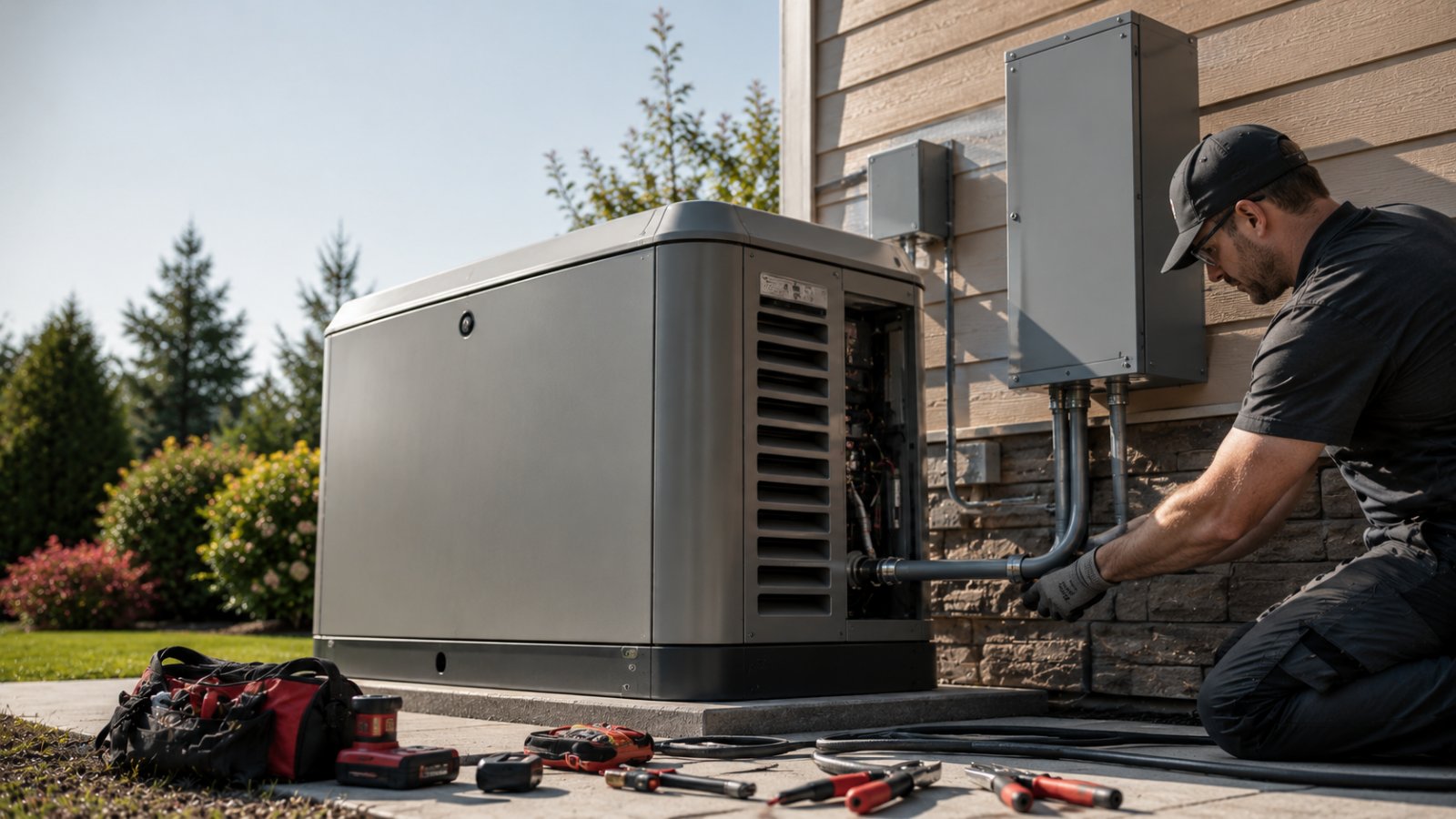
Quick answer: installing a whole-house standby generator in 2026 typically costs $8,000 to $18,000 all-in, though smaller units can start near $6,000 and large or complex installs can exceed $20,000. The generator itself runs $3,000–$7,000, and installation — labor, transfer switch, gas hookup, pad, and permits — adds $3,000–$10,000+. Your final price depends on the generator size, your fuel setup, and how complex the electrical and gas connections are.
Here’s exactly where the money goes, what drives the price up or down, and how to keep the cost in check.
Note: These are general estimates, not quotes. Actual costs vary widely by region, home, and installer — always get multiple local quotes before budgeting.
The total cost breakdown
A whole-house generator install has several parts, and the labor is a bigger share than most people expect:
|
Cost component |
Typical range |
|---|---|
|
Generator unit |
$3,000–$7,000 |
|
Installation labor |
$3,000–$5,000 (more for complex jobs) |
|
Automatic transfer switch |
$400–$2,500 (installed) |
|
Gas line / propane hookup |
$500–$2,500+ |
|
Concrete pad or base |
$200–$800 |
|
Permits and inspection |
$50–$500 |
|
Total installed |
~$8,000–$18,000+ |
The generator is only about a third to half of the total — the rest is professional installation, which involves both an electrician (for the transfer switch and panel connection) and often a plumber (for the gas line).
Cost by generator size
Bigger generators cost more, both for the unit and often for installation:
|
Size |
Covers |
Unit price |
Typical installed total |
|---|---|---|---|
|
10 kW |
Essentials, small home |
~$3,000 |
~$6,000–$10,000 |
|
14 kW |
Essentials + AC, smaller home |
~$3,800 |
~$7,000–$12,000 |
|
18 kW |
Mid-size home |
~$4,500 |
~$9,000–$14,000 |
|
22 kW |
Most homes |
~$5,000 |
~$10,000–$16,000 |
|
24–26 kW |
Larger / whole home |
~$5,500–$7,000 |
~$12,000–$20,000+ |
The most popular whole-home size — 22–26 kW — commonly lands in the $12,000–$18,000 installed range.
What drives the cost up or down
Generator size. The biggest factor — more kW means a pricier unit and often more involved installation.
Distance and complexity. The farther the generator sits from your electrical panel and gas meter, the more wire, pipe, and labor required. A simple, close install is much cheaper than one requiring long trenching.
Fuel setup. Tapping an existing natural gas line is relatively straightforward. Installing a new propane tank (and the tank itself) adds cost, as does upsizing a gas meter to handle the generator’s demand.
Transfer switch type. A whole-home automatic transfer switch costs more than a smaller, essentials-only switch or a manual one.
Electrical upgrades. Older panels sometimes need upgrading to support the system, adding cost.
Permits and local requirements. Permit fees and code requirements vary by municipality.
Don’t forget the ongoing costs
The install is the big number, but a standby generator has running costs too: fuel when it operates (natural gas is cheap; propane is pricier — see How Much Does It Cost to Run a Whole-House Generator?), and maintenance (annual service, oil changes, and filters, typically $150–$400 a year or a service contract). Budget for these so the generator is a known quantity, not a surprise.
How to save on installation
Get multiple quotes. Installation labor varies significantly between installers — three quotes can reveal thousands in difference.
Right-size it. Don’t buy more generator than you need. A load calculation (see What Size Generator Do I Need to Run My House?) or a load-management module can let a smaller, cheaper unit cover your home.
Use natural gas if available. Tapping an existing gas line is usually cheaper than installing a propane tank, and fuel costs far less to run.
Bundle and time it. Some installers offer better pricing in the off-season (spring), away from post-storm demand spikes.
Consider whether you need whole-home. If you only need to back up essentials, a smaller standby unit — or even a portable/inverter generator with a transfer switch, or a battery system — can cost far less.
Is a whole-house generator worth the cost?
At $8,000–$18,000 installed, a standby generator is a serious investment, so is it worth it? The honest answer depends on your situation. If you face frequent or long outages — hurricane country, ice-storm regions, an unreliable rural grid — the value is real and recurring: protected food, working heat and AC, a running well pump, no hotel bills, and safety for anyone who depends on power for medical needs. For those homes, it pays for itself in peace of mind and avoided losses.
If your outages are rare and short, the pure financial case is weaker, and a portable generator or a battery system may serve you better for less. A standby generator can also add resale appeal for buyers in outage-prone areas. Weigh the upfront and running costs against how often and how badly you actually lose power — and compare it to the alternatives in Standby Generator vs Battery Backup before committing.
Limitations and who this isn’t for
Installation is often as much as the generator itself: gas-line work, the transfer switch, electrical, the pad, permits and local labor vary enormously, so any figure here is a broad estimate. Fuel type, distance from the meter and panel upgrades swing the total further. Get several in-person quotes from licensed installers rather than relying on a headline price.
How we source this guide: capacities, runtimes and prices are drawn from manufacturer documentation and reputable public sources and can change. Always confirm current specifications and pricing on the manufacturer’s website before buying.
Frequently asked questions
How much does it cost to install a whole-house generator? Typically $8,000–$18,000 all-in for 2026, including the unit ($3,000–$7,000) and installation ($3,000–$10,000+). Smaller units can start near $6,000; large or complex installs can top $20,000.
How much does a Generac whole-house generator cost installed? A Generac Guardian (a popular choice) commonly runs $10,000–$18,000 installed for whole-home sizes (22–26 kW), including the transfer switch, gas hookup, pad, and permits. Smaller units cost less.
Why is generator installation so expensive? Because it requires professional electrical work (the transfer switch and panel connection), often a gas-line connection by a plumber, a pad, and permits. Labor and these connections typically cost as much as the generator itself.
Does the cost include the transfer switch? A proper installed quote should include the automatic transfer switch ($400–$2,500 installed), which is essential — it safely connects the generator to your home and switches power automatically during an outage.
Can I install a whole-house generator myself? No — it requires a licensed electrician (and usually a plumber) plus permits and inspection, for safety and code compliance. Standby generator installation is not a DIY project.
Is a whole-house generator worth it? For homes with frequent or long outages, yes — it protects food, heat, water, and safety, and can add resale appeal. For rare, short outages, a cheaper portable generator or battery system may make more sense.
Does a whole-house generator add home value? It can, particularly in outage-prone regions where buyers value reliable backup power. It’s both a functional upgrade and a selling point, though it won’t typically recoup its full cost at resale.
The bottom line
Budget $8,000–$18,000 to install a whole-house standby generator in 2026, with most whole-home installs landing in the $12,000–$18,000 range. Remember that the generator is only part of it — labor, the transfer switch, the gas hookup, the pad, and permits make up much of the total. Get several quotes, right-size the unit to your actual needs, use natural gas if you can, and factor in the ongoing fuel and maintenance costs so there are no surprises. Done right, it’s a big investment that turns even a multi-day outage into a non-event.