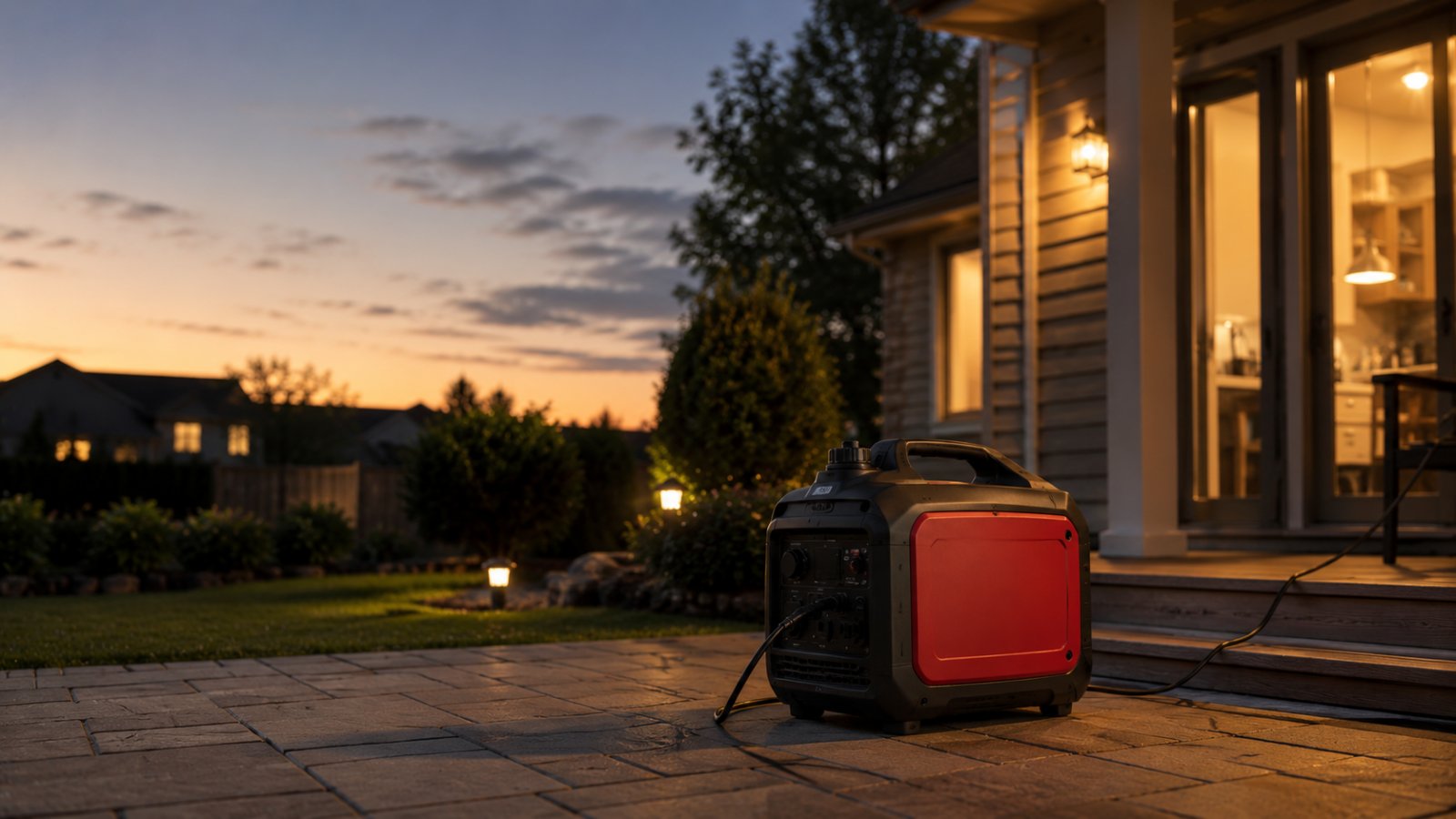
Best Portable Inverter Generators for Home Backup (2026)
A whole-house standby generator is wonderful — and a five-figure commitment. For a lot of homeowners, a portable inverter generator hits the sweet spot instead: it costs a fraction as much, runs the essentials through an outage, produces clean power that’s safe for sensitive electronics, and does it far more quietly and efficiently than an old-school portable. Roll it out, fire it up, and keep the fridge, furnace, and Wi-Fi running until the grid comes back.
Here are the best portable inverter generators for home backup in 2026, matched to how much of your home you want to keep alive.
Quick picks: for the best all-around home backup, the Westinghouse iGen4500 delivers serious power, a remote start, and great value. For premium quiet reliability, the Honda EU7000iS is the benchmark. And for dual-fuel flexibility, the Champion 4500-Watt Dual Fuel Inverter is superb.
Note: Portable generators produce carbon monoxide and must only be run outdoors, far from windows and doors — never in a garage, basement, or enclosed space. Use a transfer switch or interlock (installed by an electrician) to power home circuits safely.
Best inverter generators for home backup at a glance
|
Generator |
Running / peak watts |
Noise |
Fuel |
Best for |
Typical price |
|---|---|---|---|---|---|
|
Westinghouse iGen4500 |
3,700 / 4,500 W |
~52 dBA |
Gas |
Best overall home backup |
~$900–$1,100 |
|
Honda EU7000iS |
5,500 / 7,000 W |
~52–58 dBA |
Gas |
Best premium/most power |
~$4,300–$4,700 |
|
Champion 4500 Dual Fuel Inverter |
3,500 / 4,500 W |
~61 dBA |
Gas / propane |
Best dual-fuel |
~$900–$1,100 |
|
Generac iQ3500 |
3,000 / 3,500 W |
~58 dBA |
Gas |
Best mid-size |
~$1,000–$1,300 |
|
Honda EU2200i |
1,800 / 2,200 W |
~48–57 dBA |
Gas |
Best compact/quietest |
~$1,100–$1,300 |
|
Westinghouse iGen4500DF |
3,700 / 4,500 W |
~52 dBA |
Gas / propane |
Best dual-fuel value |
~$1,000–$1,200 |
Why an inverter generator for home backup?
Inverter generators differ from conventional portable generators in ways that matter a lot for home use:
Clean power. Inverter generators produce stable, “pure sine wave” electricity with very low total harmonic distortion — safe for laptops, TVs, phones, and modern appliances with sensitive electronics. Conventional generators can produce “dirty” power that risks damaging delicate devices.
Quiet. Inverter units are dramatically quieter than traditional generators — often 48–60 dBA versus 70+ — thanks to variable engine speeds and better sound insulation. Your neighbors (and you) will notice.
Fuel efficiency. They throttle the engine up and down to match the load instead of running full-tilt constantly, so they sip fuel and run longer on a tank.
Portability and parallel capability. They’re lighter and more compact, and many can be “paralleled” — linked with a second identical unit to double your output when you need more.
The trade-off is a higher price per watt than a bare-bones conventional generator, and typically lower maximum output — which is why they’re ideal for essentials backup rather than running an entire large home at once.
How much power do you need for home backup?
Match the generator to what you want to run:
Essentials (fridge, furnace blower, lights, Wi-Fi, phone charging): about 2,000–4,000 running watts. A Honda EU2200i (or a pair) or a Generac iQ3500 handles this.
Comfortable backup (add a window AC, sump pump, more outlets, small well pump): 3,500–5,000 running watts — the Westinghouse iGen4500 or Champion 4500 range.
Heavier backup (large well pump, central items, more at once): step up to a 7,000-watt unit like the Honda EU7000iS, or parallel two 4,500-watt units.
Our guide What Size Generator Do I Need to Run My House? has the full sizing math. Remember to account for the startup surge of motors like a fridge compressor or well pump.
The best portable inverter generators for home backup
Westinghouse iGen4500 — Best overall
The iGen4500 is the home-backup value champion. It delivers 3,700 running watts (4,500 peak) — enough for a fridge, furnace, lights, Wi-Fi, and more — runs quietly at around 52 dBA, and includes a genuinely useful remote electric start so you can fire it up from a key fob. Add its efficient inverter engine and long runtime, and it covers most homeowners’ essentials backup for around $1,000. It’s the one we’d recommend to most people.
Best for: Most homeowners wanting affordable, capable essentials backup.
Honda EU7000iS — Best premium and most power
When you want inverter-clean power and serious output, the EU7000iS is the gold standard. Its 5,500 running watts (7,000 peak) can run a large chunk of a home — including a well pump and larger loads — and Honda’s legendary reliability, quiet operation, and fuel efficiency make it the unit serious buyers trust for years of dependable backup. It’s expensive, but it’s the best portable inverter generator you can buy.
Best for: Buyers wanting maximum inverter power and Honda reliability.
Champion 4500-Watt Dual Fuel Inverter — Best dual-fuel
This Champion gives you the best of both worlds: inverter-clean power and the flexibility to run on gasoline or propane. Propane stores indefinitely (no stale-fuel worries), making it ideal for a backup generator that sits unused between emergencies. With 3,500 running watts, an electric start, and a wallet-friendly price, it’s a superb, flexible home-backup choice. See our full roundup in Best Dual-Fuel Generators of 2026.
Best for: Homeowners wanting fuel flexibility and long-term storage.
Generac iQ3500 — Best mid-size
The iQ3500 packs 3,000 running watts into a quiet, well-built package with a clear digital display and one of the best power-to-size ratios in its class. It’s a step up from the 2,200-watt units for running more essentials, while staying reasonably portable. A dependable mid-size pick for smaller homes or apartments.
Best for: Smaller homes and those wanting more than a 2,000-watt unit.
Honda EU2200i — Best compact and quietest
The EU2200i is the benchmark small inverter generator: whisper-quiet (as low as 48 dBA), bulletproof reliability, and light enough to carry with one hand. On its own it runs the true essentials (fridge, lights, devices, a CPAP); pair two of them and you double the output to run much more. For quiet, compact, ultra-reliable backup, nothing beats it. It also anchors our Best Quiet Generators for Home Use roundup.
Best for: Quiet, compact essentials backup and pairing for more power.
Westinghouse iGen4500DF — Best dual-fuel value
The dual-fuel version of our top overall pick adds propane capability to the iGen4500’s winning formula: 3,700 running watts, ~52 dBA, remote start, and now the flexibility to run on gas or propane. For homeowners who want fuel flexibility without paying a premium, it’s an outstanding value.
Best for: Value-focused buyers wanting dual-fuel flexibility.
Inverter vs conventional generator for home backup
It’s worth understanding why we focus on inverter generators for home backup rather than cheaper conventional ones. A conventional generator runs its engine at a constant speed and produces raw AC power — it’s cheaper per watt and often higher in maximum output, but it’s loud, less fuel-efficient, and produces “dirty” power with higher harmonic distortion that can harm sensitive electronics like laptops, TVs, and modern appliance control boards.
An inverter generator converts its output to clean, stable, pure-sine-wave power (safe for any device), varies engine speed to match the load (so it’s far quieter and sips less fuel), and is more compact and often parallel-capable. The trade-off is a higher price per watt and a lower ceiling on output.
For home backup specifically — where you’re running a fridge, electronics, Wi-Fi, and a furnace, often near the house and sometimes overnight — the inverter’s clean power, quiet operation, and efficiency are worth the premium. A conventional generator makes more sense only when you need maximum raw wattage on a budget and aren’t powering sensitive electronics. For most homeowners backing up essentials, inverter is the right call.
Safety: read this before you buy
Portable generators cause carbon monoxide deaths every year, so the rules are non-negotiable: run it outdoors only, at least 20 feet from the house, never in a garage or basement even with the door open. To power your home’s circuits safely, have an electrician install a transfer switch or interlock kit — never back-feed through an outlet. Look for models with built-in CO sensors (many newer units auto-shut-off if CO builds up) for an extra layer of protection.
Limitations and who this isn’t for
Inverter generators are quieter and produce cleaner power for electronics, but they cost more per watt and most are limited in output — fine for essentials, not for whole-home or large 240V loads. They still burn fuel, need maintenance and must never run indoors or in a garage. Match the running and surge watts to what you actually need to power.
How we source this guide: capacities, runtimes and prices are drawn from manufacturer documentation and reputable public sources and can change. Always confirm current specifications and pricing on the manufacturer’s website before buying.
Frequently asked questions
What is the best portable inverter generator for home backup? For most homes, the Westinghouse iGen4500 — it offers strong power, quiet operation, remote start, and great value. For maximum power, the Honda EU7000iS; for dual-fuel flexibility, the Champion 4500 or Westinghouse iGen4500DF.
How many watts do I need to back up my house with a portable generator? Essentials (fridge, furnace, lights, Wi-Fi) need 2,000–4,000 running watts; comfortable backup with a window AC or sump pump needs 3,500–5,000; heavier loads need 7,000 or two paralleled units. Account for motor startup surges.
Are inverter generators good for home backup? Yes. They produce clean power that’s safe for electronics, run much quieter and more efficiently than conventional generators, and many can be paralleled for more output — ideal for essentials backup during outages.
Can a portable inverter generator power a whole house? Not a large house entirely, but a big unit like the Honda EU7000iS (or paralleled 4,500-watt units) can run most essentials plus some larger loads. For running an entire home automatically, a standby generator is the better fit.
How do I connect a portable generator to my house? Through a transfer switch or interlock kit installed by a licensed electrician, which safely connects the generator to your panel. Never back-feed power through a regular outlet — it’s dangerous and illegal.
Is an inverter generator worth it for home backup? Yes, for most homeowners. Its clean power protects sensitive electronics, it runs much quieter and more efficiently, and many can be paralleled for more output — all valuable for home use. Conventional generators are only better when you need maximum raw wattage cheaply.
Can you connect two inverter generators together? Yes — many inverter generators support “parallel” operation, linking two identical units with a cable to roughly double your output. It’s a flexible way to start small and add power later, or to run more during a bigger outage.
Do inverter generators produce clean enough power for a computer or TV? Yes. Inverter generators produce pure-sine-wave power with very low harmonic distortion, safe for laptops, TVs, phones, and other sensitive electronics — a key reason they’re preferred for home backup.
The bottom line
A portable inverter generator is the smart middle path for home backup: far cheaper than a standby system, quiet and clean enough for modern electronics, and powerful enough to run your essentials through an outage. The Westinghouse iGen4500 is the best all-around choice, the Honda EU7000iS is the premium powerhouse, and the Champion 4500 Dual Fuel adds fuel flexibility. Size it to your essentials, run it safely outdoors, add a transfer switch, and you’ve got dependable backup for a fraction of a whole-house system’s cost.